Czech Heritage and Dishes · Soups and Stews

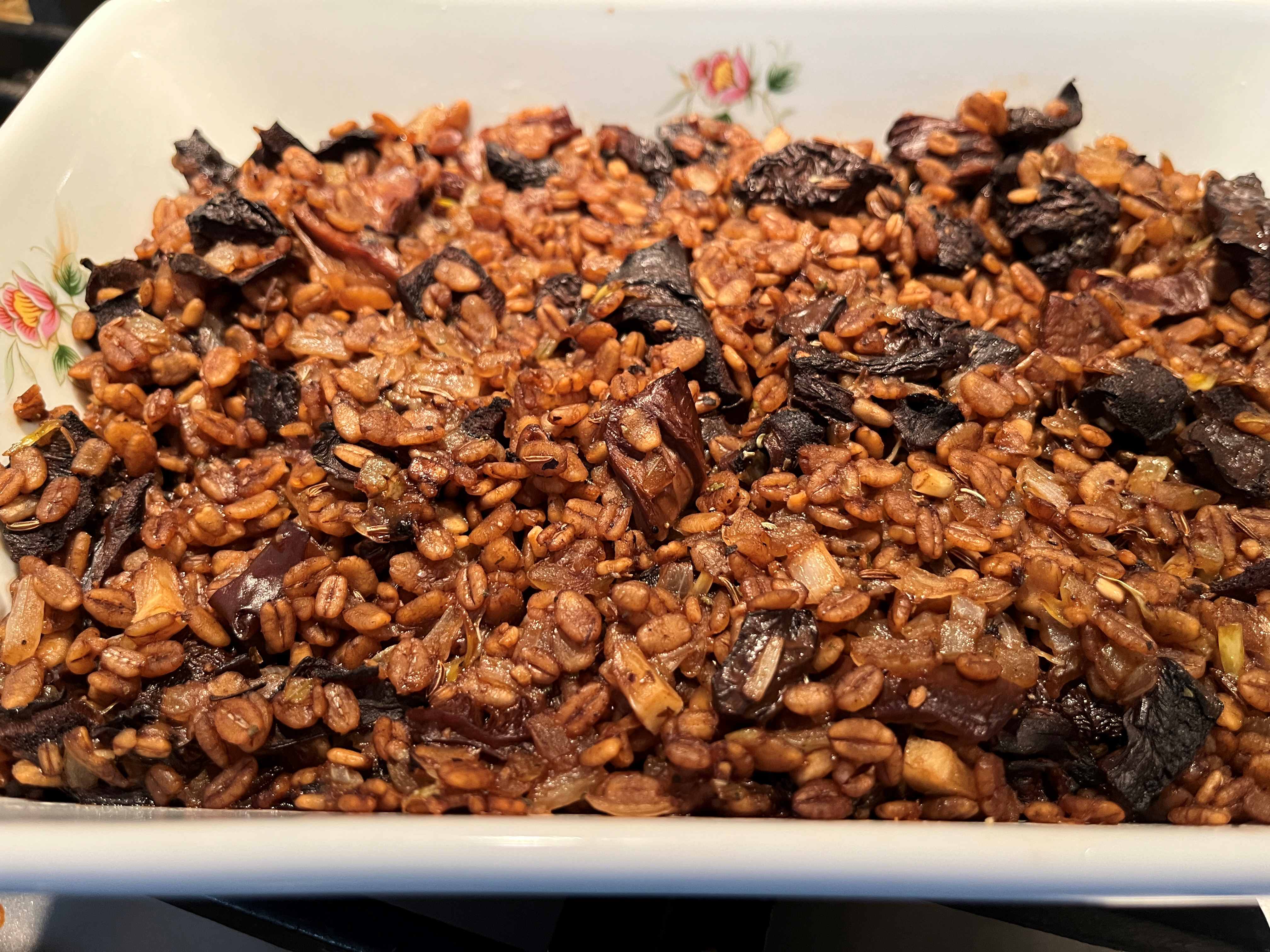
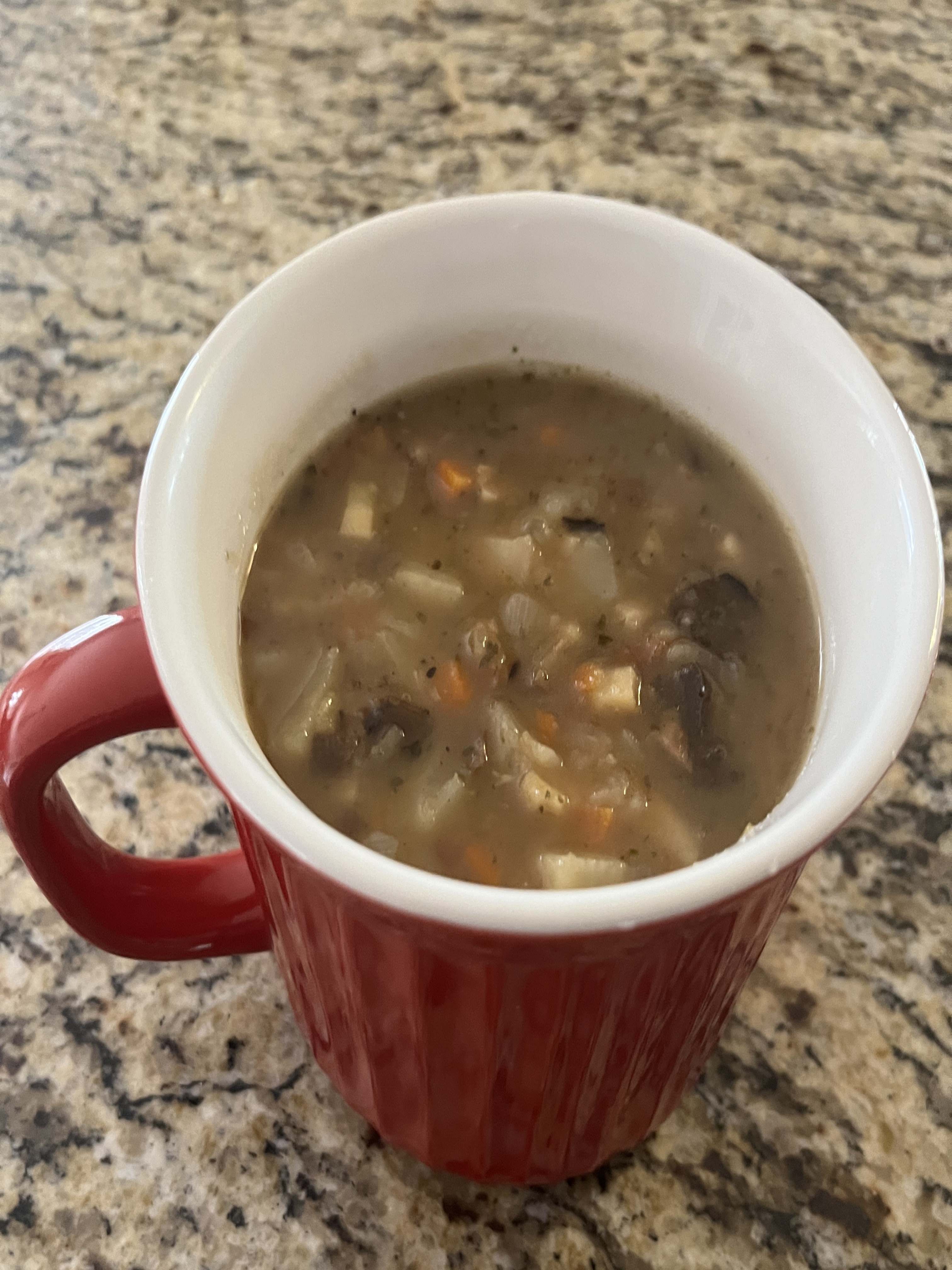
Potato Mushroom Soup (Czech Bramborkačka)

Czech Potato Mushroom Soup used so many healthy ingredients and was a wonderful, hearty soup for a cold winter dinner. Brown soups do not photograph well but how do you photograph taste? Next time I make it, I will increase the caraway seed and decrease the marjoram because I LOVE caraway. It’s delicious as the recipe states,so make according to your own taste.

This soup would be great if you had leftover beef roast or any other protein to add.

POTATO MUSHROOM SOUP (CZECH BRAMBORAČKA)

INGREDIENTS:
  • 3 onions medium
  • 1 carrot large
  • 3 and ½ ounces celeriac root (100 g)
  • 1 parsley root medium
  • 4 potatoes medium
  • 3 cloves garlic
  • 1 handful dried mushrooms ideally European varieties; plus 1 and 1/4 cup water to soak
  • ¾ stick unsalted butter (85 g)
  • ⅓ cup all-purpose flour (40 g)
  • 5 cups water or vegetable broth
  • 1 Tablespoon fresh parsley
  • 1 Tablespoon dried marjoram
  • ½ teaspoon caraway seeds crushed
  • ¼ teaspoon ground pepper
  • salt
DIRECTIONS:
  1. Clean and peel the vegetables (carrot, parsley root, celery, potatoes) and cut into ½-inch cubes. Peel and chop the garlic. Finely chop the onion.
  2. Soak the dried mushrooms in 1 ¼ cups water, bring to a boil, and gently simmer for about 10 minutes. Reserve the mushroom stock for later.
  3. Heat a Dutch oven or a thick-bottomed soup pot over medium heat and melt the butter. Add the root vegetables (carrot, parsley root, celery – not the onion yet).
  4. Fry the vegetables until lightly golden (5-8 minutes), stirring occasionally. Add the onion and cook for 5 minutes, stirring occasionally.
  5. Reduce the heat to one-third and start making the roux. Add the flour to the vegetables and fry for about a minute, until the veggies are coated with flour and lightly golden. Stir frequently to prevent the flour from scorching. Add the crushed caraway seeds and ground pepper, and stir.
  6. Add about a cup of water or vegetable broth and whisk to prevent lumps. Add the remaining liquid and stir. Salt to taste, turn up the heat, cover and bring to a boil.
  7. Once the soup starts to boil, add the diced potatoes and boil gently for 10 minutes. Then add the chopped garlic, soaked mushrooms and about 1 cup of stock. Reduce heat and let cook covered for about 5-7 minutes, or until potatoes are tender.
  8. The last step is to add the dried marjoram. Rub the marjoram with your fingers before adding it to release its essential oils. Cook for another 1 minute, then remove the bramboracka soup from the heat.
  9. Taste and season with salt and pepper if necessary. Stir in a spoon of chopped fresh parsley.

Recipe from CookLikeCzechs

Cookies and Bars · Czech Heritage and Dishes

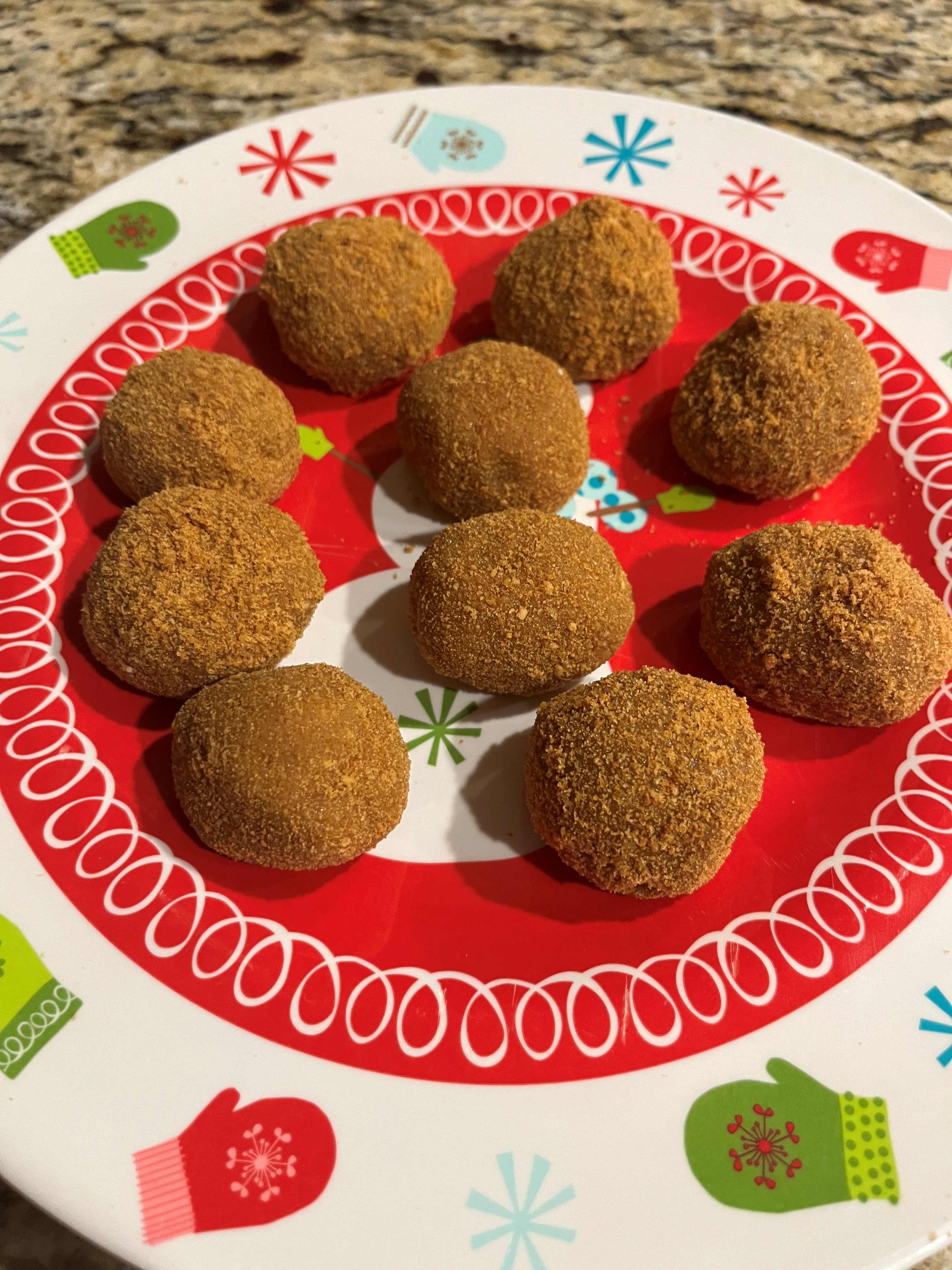
No Bake Christmas Honey Balls (Czech Medovníkové koule)

Czech Honey Balls remind me of a very rich cake pop, only better. I like the cookie dough as well and could easily just eat it as a cookie, vs. crumbled in this yummy honey ball. My family is divided about this cookie. One half loves it and says it’s one of the best cookies they’ve ever had. The other half doesn’t like the texture…what? I just want to give honest feedback here. Just know my grandsons will eat every one I make and any you have leftover.

No Bake Christmas Honey Balls (Czech Medovníkové koule)

INGREDIENTS:
  • Honey dough:
    • 1 3/4 cups all-purpose flour (230 g)
    • ½ cup powdered sugar (60 g)
    • 1 egg
    • 1 teaspoon baking soda
    • 2 Tablespoons honey liquid (I heated in microwave for 20 seconds)
    • ⅓ stick unsalted butter (40 g) softened at room temperature
  • To finish:
    • 1 stick unsalted butter (110 g) softened at room temperature
    • ⅔ cup caramelized sweet condensed milk (200 g) Dulce de Leche or make your own with 1 can sweet condensed milk (see recipe below).
DIRECTIONS:
  1. If you are making your own caramelized sweet condensed milk, it’s so easy. Remove the label from the can and place, unopened, in a large pot of water. Bring to a boil. Simmer for 3 hrs. Remove from the water and cool. Ta-da you have caramel!
  2. Mix the flour with the baking soda and put the floury mixture in a bowl. Add the eggs, softened butter, liquid honey, and powdered sugar. First, mix the wet ingredients with the flour using a fork, then work into a soft dough with your hands.
  3. Wrap the dough in plastic wrap and put it in the fridge to rest for an hour.
  4. Roll the rested honey dough into sheets about 1/2 inch (1 cm) thick. The shape doesn’t matter too much, as the dough will be crushed into crumbs when baked. When rolling out the dough, I recommend dusting the work surface lightly with flour to prevent the dough from sticking.
  5. Line a baking tray with parchment paper and place the honey dough sheets on it. Preheat the oven to 320°F (160°C). Place the baking tray in the oven and bake for about 12 minutes.
  6. Once baked, take off the parchment paper with the honey dough sheets and put them on a wire rack to cool. If you let the baked dough cool on the tray, it’s fine, but in that case, I recommend placing the tray in a cool spot.
  7. Once the sheets of dough have cooled, break them into crumbs. You can do this by hand or by placing the pieces of dough in a food processor and pulsing them a few times until they turn into small crumbs. Alternatively, you can grate the dough using a hand grater.
  8. Set aside about half a cup of the crumbs to coat the balls. Combine the remaining crumbs with the caramelized milk and softened butter. Start by mashing them together with a fork, then use your hands to form a soft dough.
  9. Cover the soft dough with plastic wrap and place it in the fridge for about an hour to firm up.
  10. Scoop equal-sized portions of the dough, roll each into a ball using your hands, and coat them by rolling in the reserved crumbs.

Recipe slightly adapted from CooklikeCzechs.com

Czech Heritage and Dishes · Soups and Stews

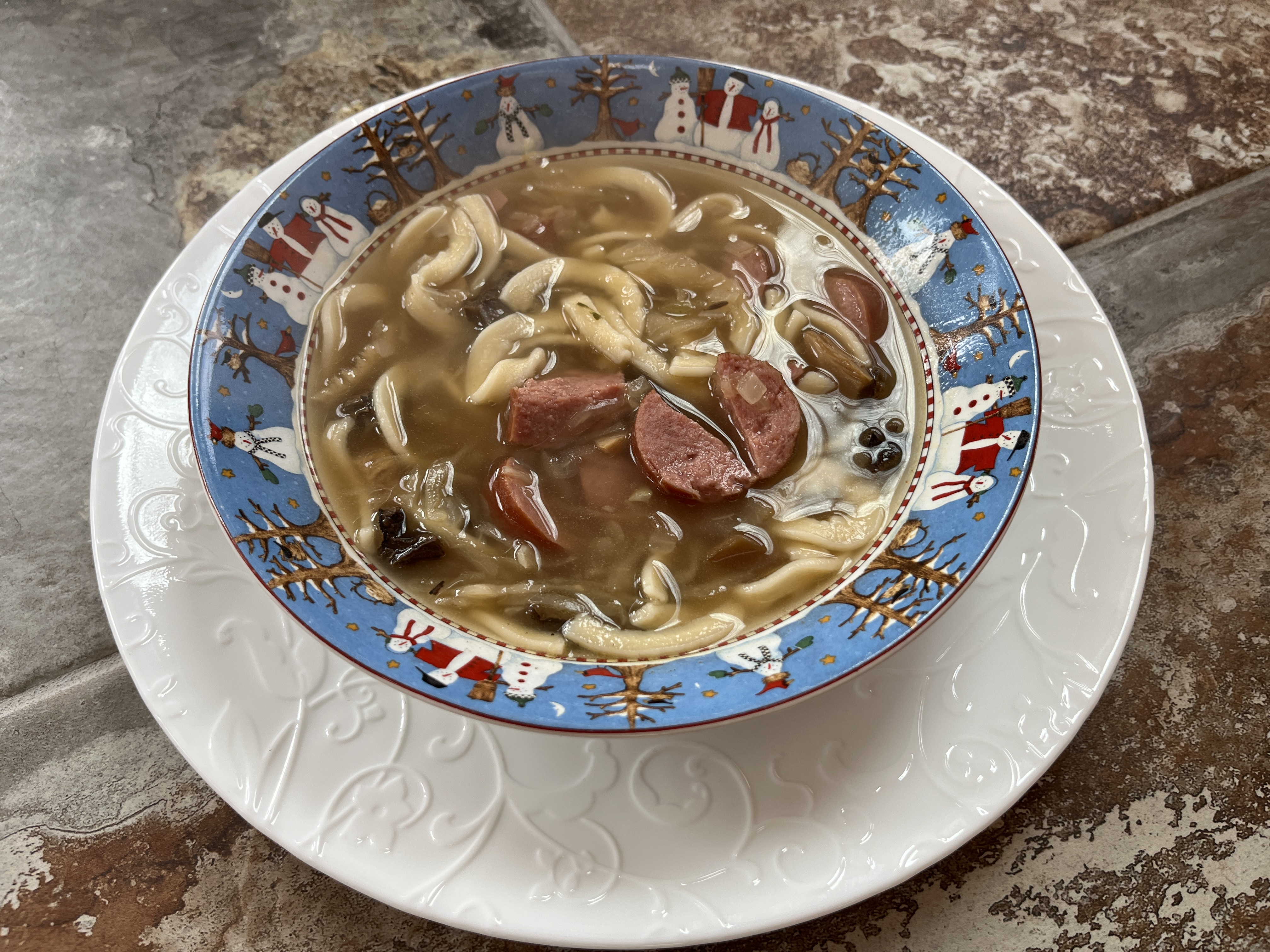
Kapustnica: Slovak Christmas Sauerkraut Mushroom Soup

My Father’s ancestral roots are Czech and Slovak. I’ve always been interested in the ethnic foods of these regions and love trying the foods that they may have eaten. Kapustnica mean Sauerkraut Soup and is often served on Christmas Eve as well as throughout the winter months. Imagine the ingredients of these foods were preserved for use during the winter months. The soup is smoky and a bit sour due to the sauerkraut. The broth is delicious. Serve the soup with a nice crusty bread to complete the meal.

While this is a traditional Christmas soup, I prefer this soup in the cold, dark days of January.

Kapustnica: Slovak Christmas Sauerkraut Mushroom Soup

INGREDIENTS:
  • 1 to 1.5 lbs. Sauerkraut (Frank’s refrigerated is recommended)
  • 1 tsp. caraway seed
  • 1 bay leaf
  • 2-3 links of smoked sausage
  • 3 quarts water
  • 1 oz. dried mushrooms (porcini recommended)
  • pasta (I cooked 1 cup of dried Kluski noodles)
  • Roux:
    • 3 tablespoons oil
    • 1 small chopped onion
    • 1 clove minced garlic
    • 3 tablespoons flour
    • 1/2 tsp. salt
    • 1/2 tsp. pepper
    • Paprika to taste
    • 1 cup water
DIRECTIONS:
  1. Add three quarts of water to a large pot. Add sauerkraut, caraway seed, and bay leaf. Bring to a boil.
  2. Soak mushrooms in cold water for 15 minutes. Drain and discard liquid. Add to soup.
  3. Using a fork, poke many holes in the smoked sausages. Add to soup.
  4. Simmer soup for 1-2 hours.
  5. Prepare the roux: Add oil to pan. Add onions and cook until translucent. Add garlic and cook for an additional 1 minute. Add flour and stir until mixture is light brown. Add salt, pepper, paprika and ____. Stir to combine. Add 1 cup water. Whisk and cook until mixture thickens. Add to soup. Continue simmering soup.
  6. Remove smoke sausage from soup and slice into pieces. Add back to soup.
  7. Remove bay leaf.
  8. Cook pasta separately. When cooked, add to soup.

Recipe from YouTube

or

https://tasteisyours.com/slovak-sauerkraut-soup-kapustnica/

https://cookpad.com/uk/recipes/274784-kapustnica-slovakian-sauerkraut-sausage-soup

Cakes · Czech Heritage and Dishes · Desserts

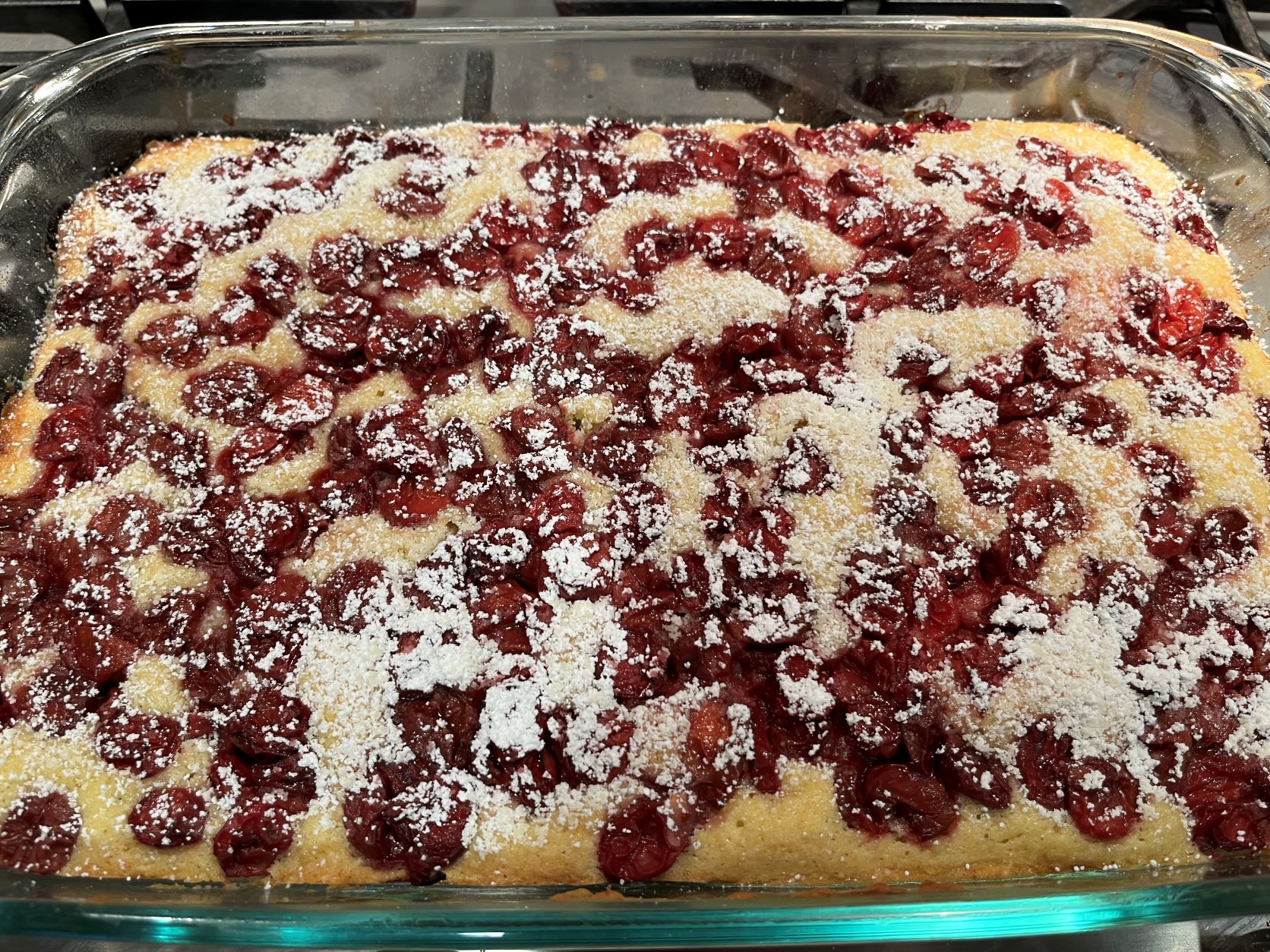
Cherry Bublanina: Czech Sponge Cake

Cherry Bublanina is a delightfully light sponge cake with fruit. I used cherries, my favorite but other fruit can be used. This was my first time making this Czech delicacy. It was easy and the results were delicious.

Cherry Bublanina

INGREDIENTS:
  • 1 1/4 cups milk
  • 5 eggs, separated
  • 12 tbsp. unsalted butter
  • 3 tbsp. yogurt or sour cream
  • 2 cups plain flour
  • 3/4 cup sugar
  • 1 tsp. baking powder
  • pinch salt
  • lemon zest (I used 1/2 of 1 lemon)
  • 1 tsp. vanilla
  • 2 cups cherries (I used sour cherries)
  • Powdered sugar for dusting
DIRECTIONS:
  1. Preheat oven to 375 degrees Fahrenheit. Grease a 9×11″ pan.
  2. Toss the fruit with a spoonful of flour and set aside.
  3. In a small bowl, whisk together the dry ingredients: flour, sugar, baking powder, lemon zest, and salt.
  4. Melt the butter, mix in vanilla, yogurt or sour cream and egg yolks until smooth batter forms.
  5. Whip the egg whites in a clean, dry bowl until glossy, stiff peaks form.
  6. Using a spatula, fold the egg whites into the batter.
  7. Pour the batter into a baking dish and cover evenly with cherries. Be gentle so you do not deflate the cake too much.
  8. Bake for about 30 minutes, or until a toothpick inserted comes out cleanly.
  9. Cool, cut into squares, and dust with powdered sugar.

Attribution

Beverages · Czech Heritage and Dishes · Garden · Health · Home

Linden Flower Infusion and Tea

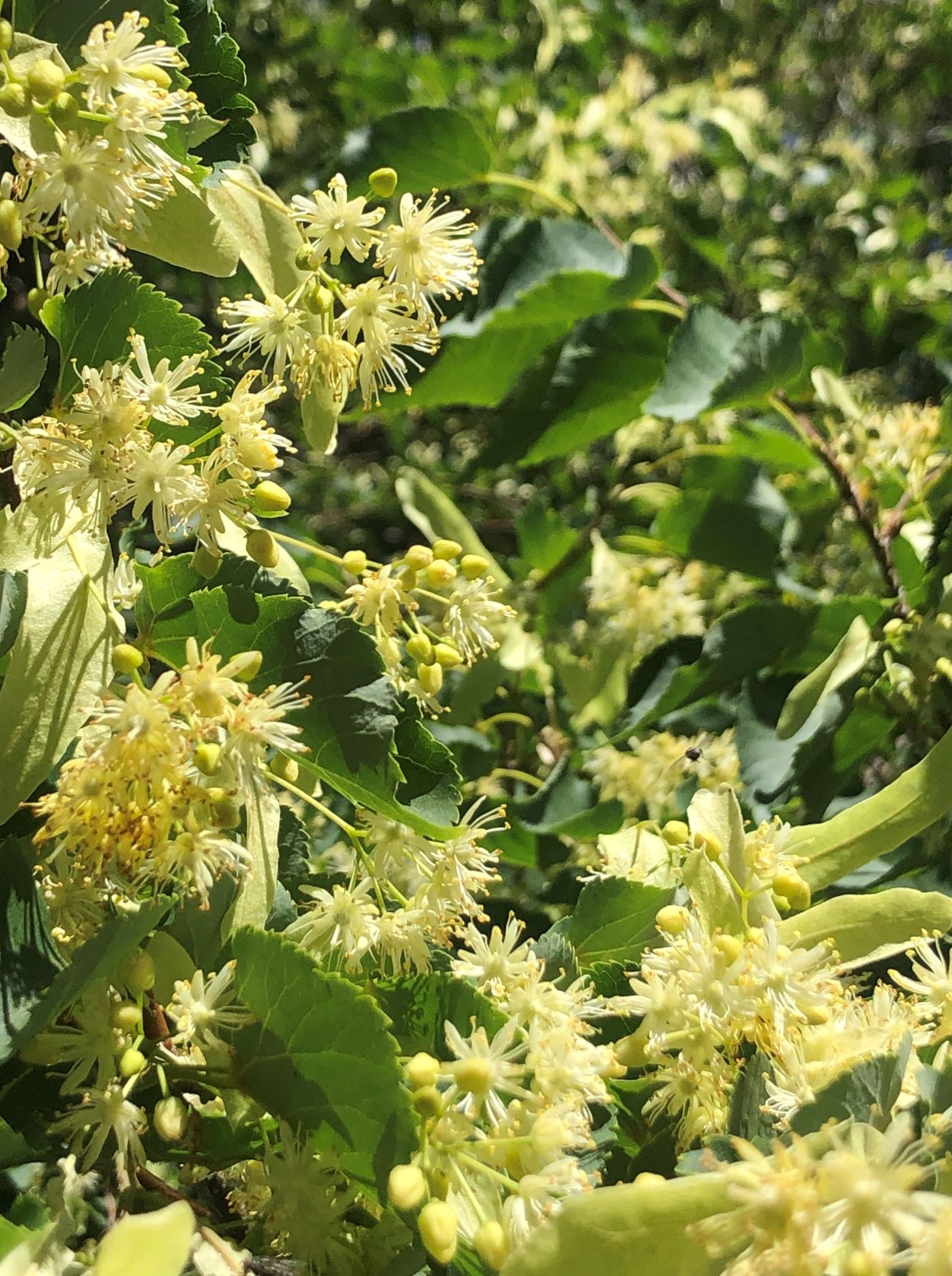
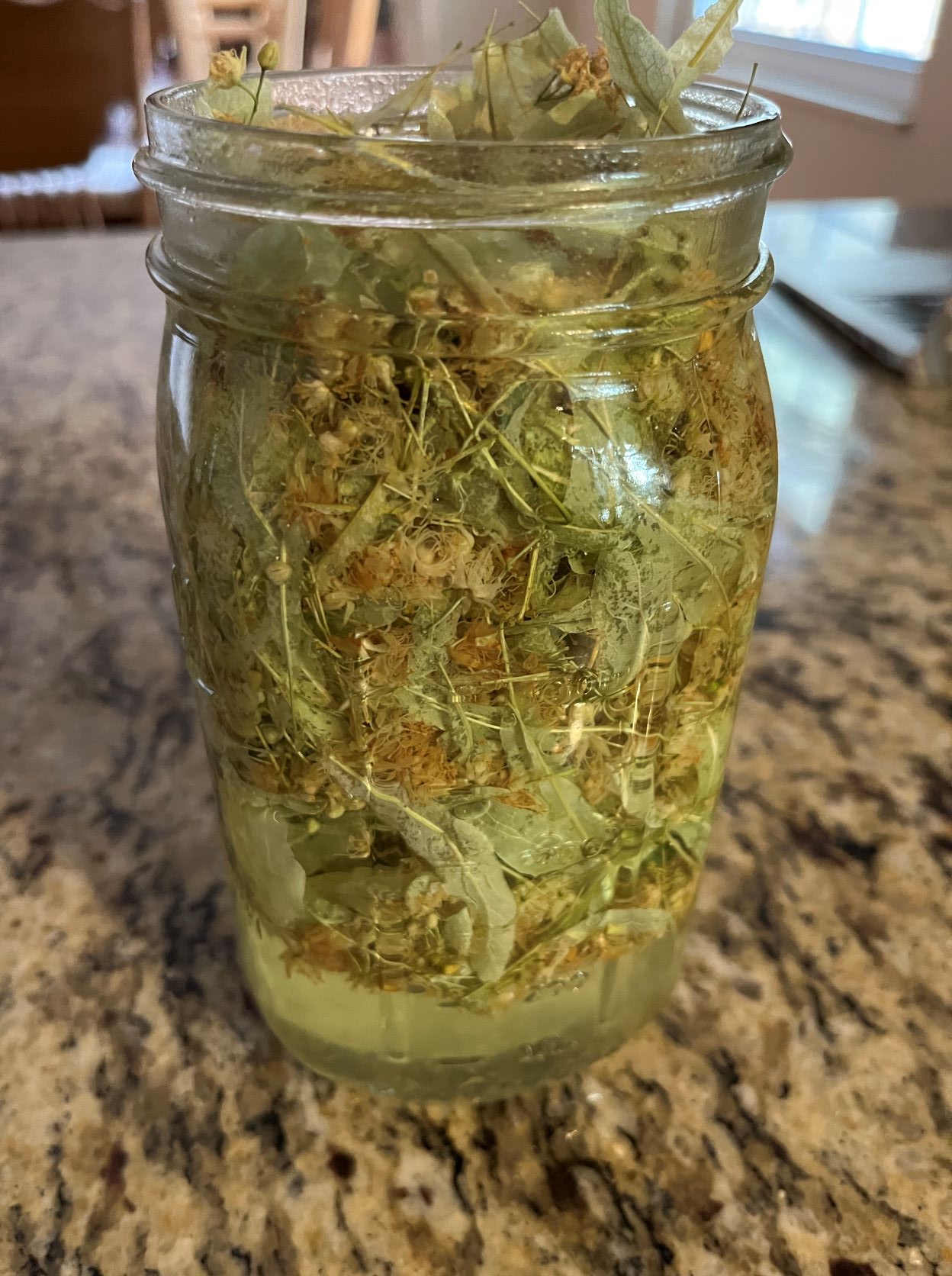
In 1988, we bought our home with a beautiful tree in the front yard. The Linden tree has provided beautiful shade for our front yard, a marvelous climbing tree for my children and grandchildren, amazing fragrance when the tree is in bloom, pollen for the honeybees, symbolic heart-shaped leaves, and now a wonderful source for a Linden infusion and tea.

I have felt a tremendous kinship to this beautiful tree for years. Little did I know that dried Linden leaves have medicinal beneficial. Benefits of the tea or infusions are reduced stress and anxiety and help with gut issues.

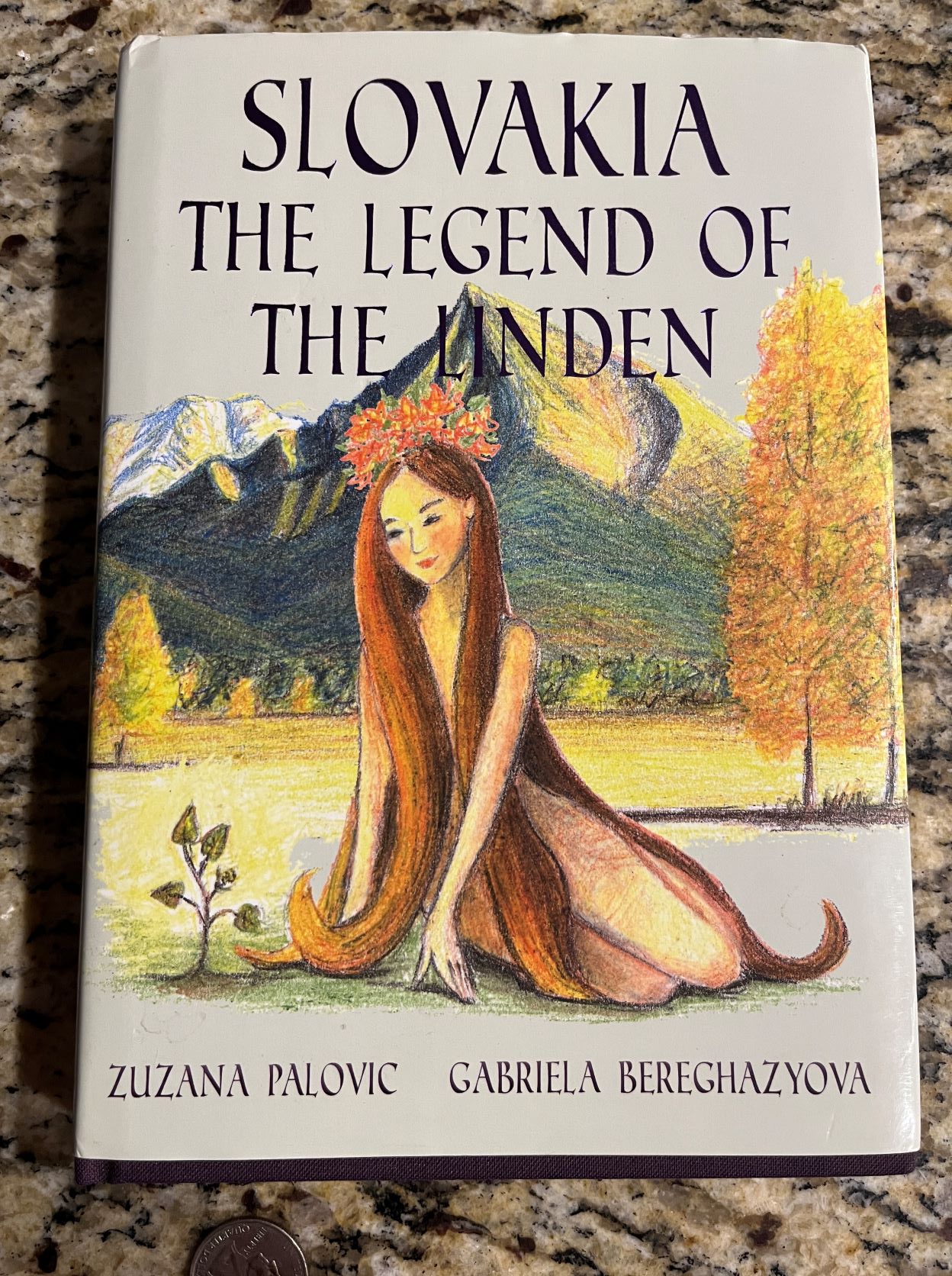
The Linden tree is a beloved symbol of the Slovak people, part of my heritage. In the book, ‘Slovakia, The Legend of the Linden” written by Zuzana Palovic and Gabriela Bereghazyova, shares the history and symbolism of this beautiful relationship. On page 5 of their book, is a beautiful description:

“INTRODUCTION: THE SACRED LINDEN CODE The land we know as Slovakia is protected by an all-powerful symbol, the Linden tree and its heart-shaped leaf. For centuries, the sacred icon has represented the heartfel essence of hte Slovak people. It is a code that captures th narrative of a nation. The heart-shaped emblem masterfully unites the humanity, geography and heritage of the region.”

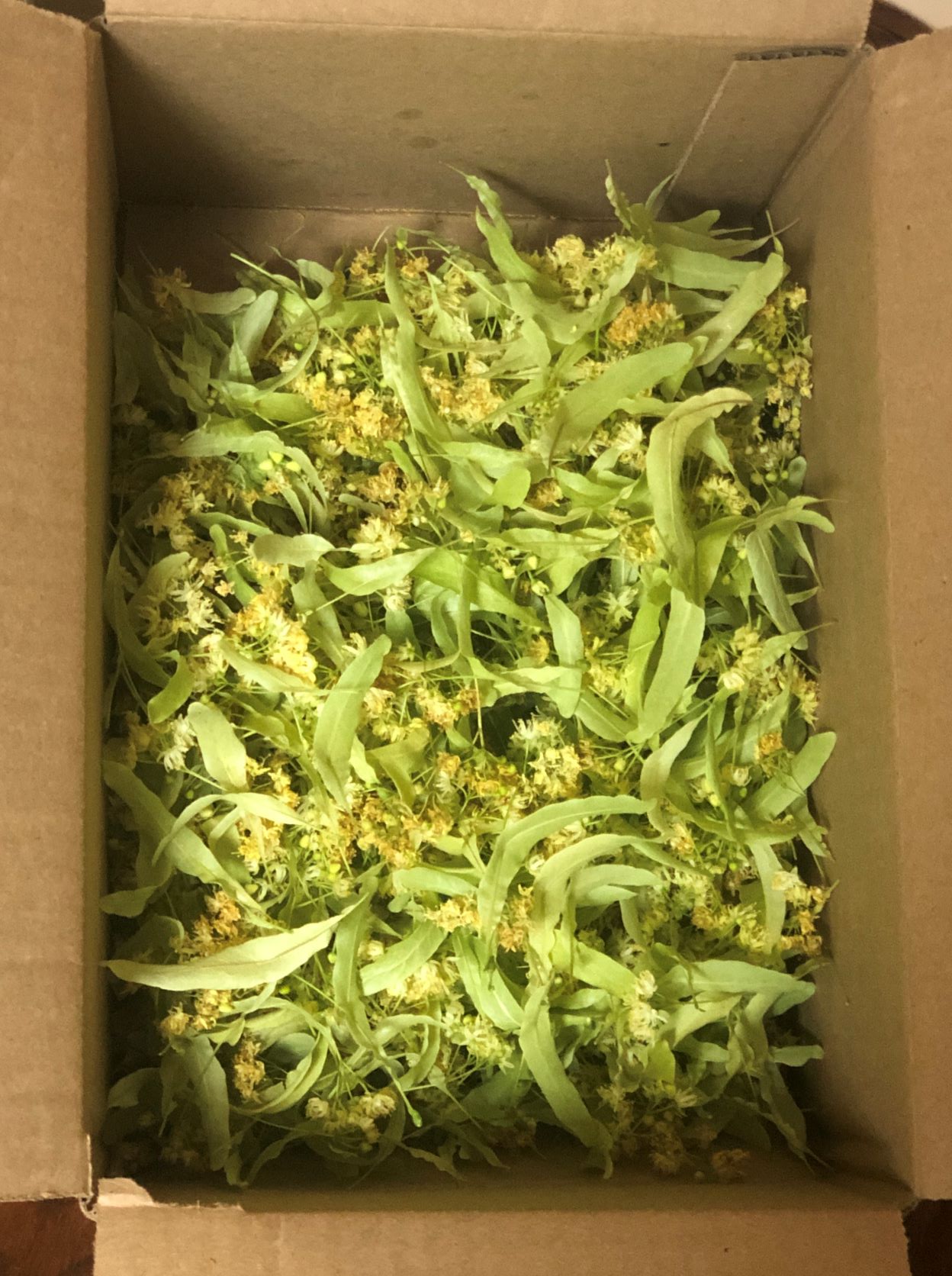
If you are fortunate enough to have access to a Linden tree, take advantage of the few days that the tree blooms and collects blossoms to dry and enjoy as a tea or infusion. It’s worth the trouble.

Linden Flower Infusion and Tea

INGREDIENTS:
  • Dried Linden Flowers
  • Boiling Water
DIRECTIONS:
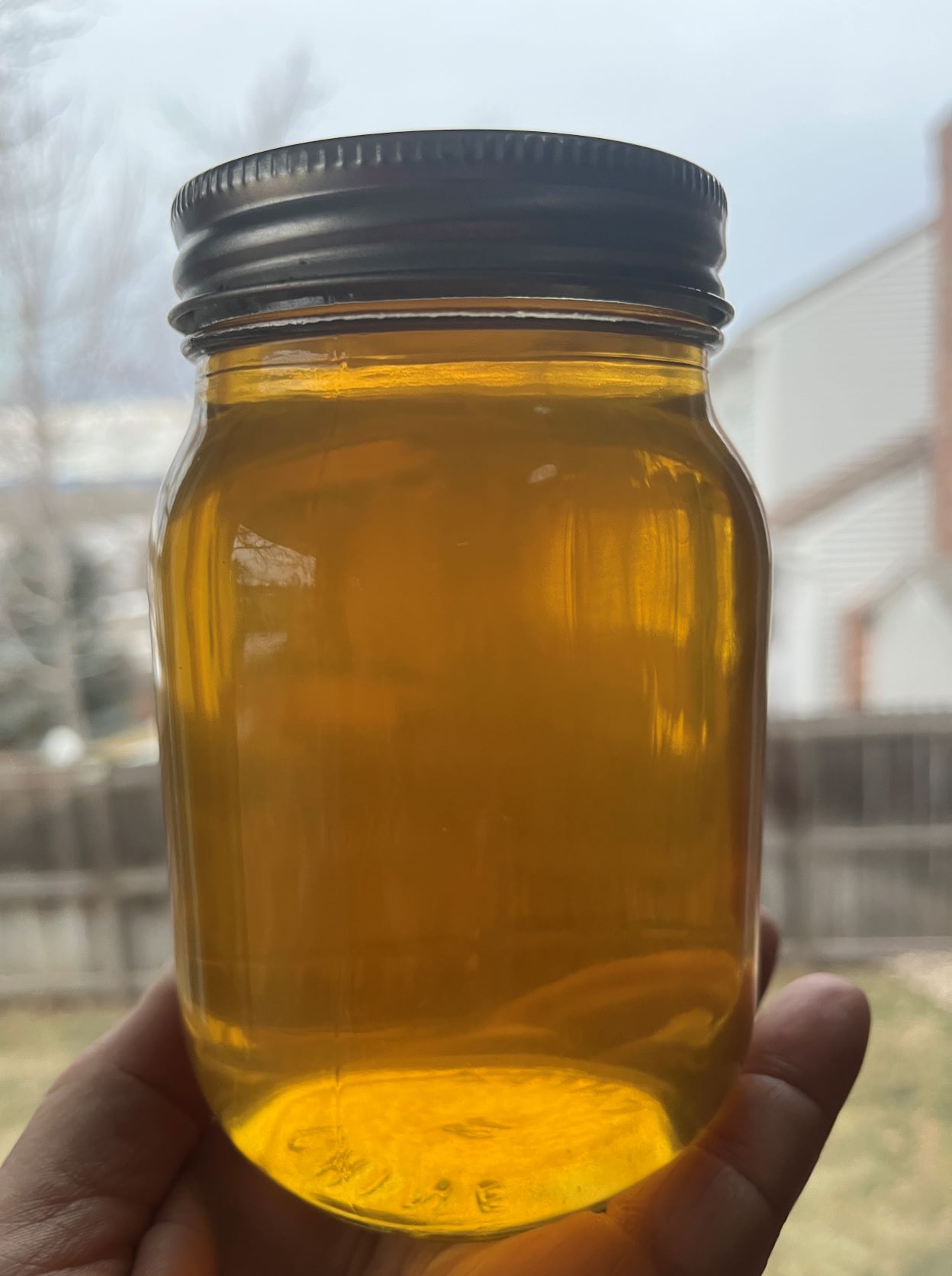
  1. Linden Flower Infusion: Place 1/2 to 1 ounce of dried Linden flowers in a 1 quart Ball jar. Boil water and slowly fill Ball jar. Cap and let steep for 24 hours. After 24 hours, strain. Optional: Bring liquid to a second boil. Cool. Use the infusion over the next 2-3 days. (Note: I wonder if the infusion could be frozen for later use.)
  2. Linden Flower Tea: Place 3 tsp. of dried Linden flowers in a tea infuser. Add 1 cup boiling water and let steep for 10 minutes. Optional: Enjoy with lemon or honey.

Eagle Song Gardener Luli’s Homestead Global Slovakia and the Legend of the Linden Wikipedia/Tilia or Linden

Cookies and Bars · Czech Heritage and Dishes

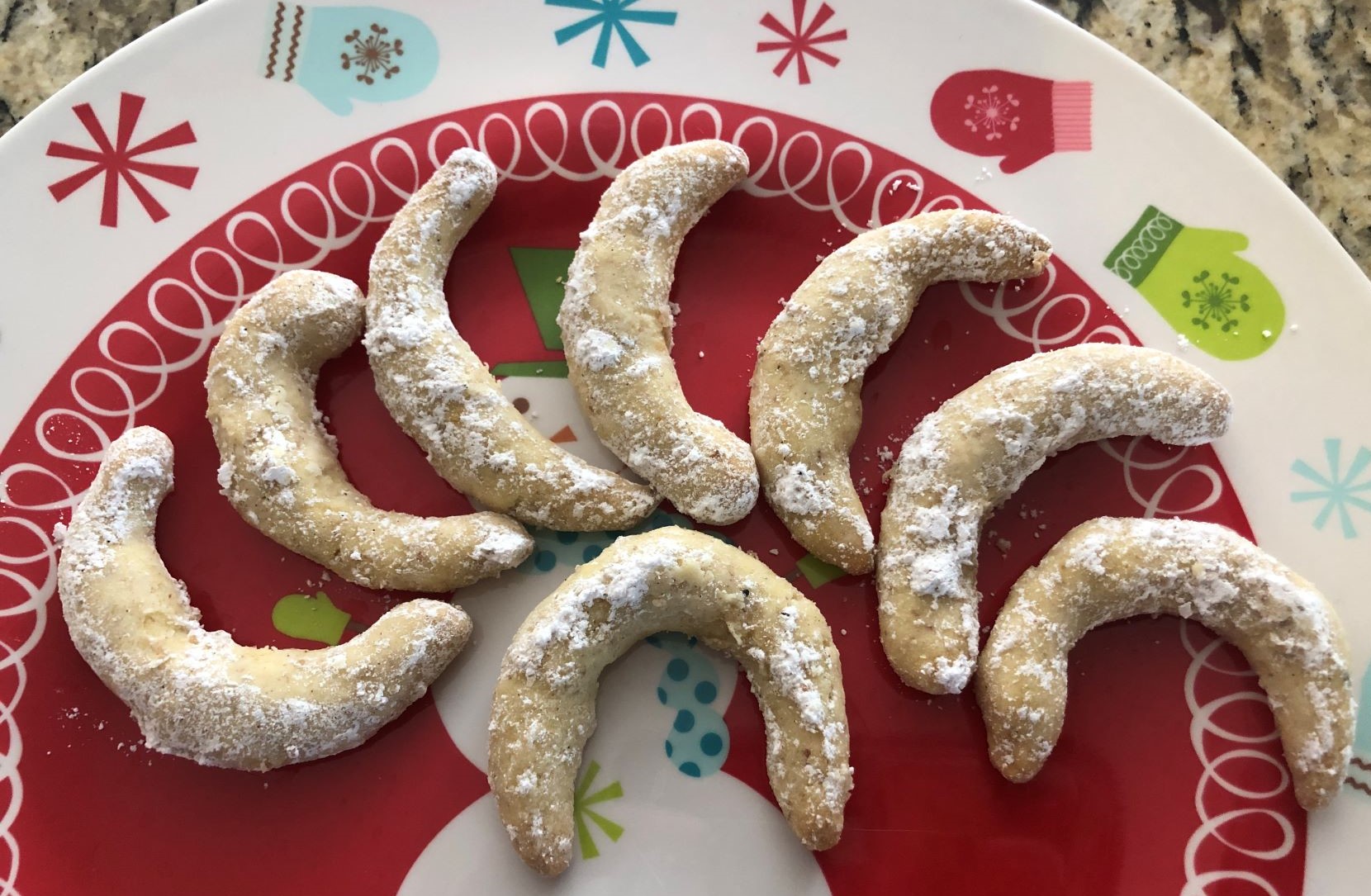
Czech Vanilkove Rohlicky (Vanilla Crescents)

Czech recipes of all types are fun for me to make and eat. December 2021 I joined Sokol San Francisco for their Christmas cookie webinar. It was a wonderful class and I chose to make the Vanilkove Rohlicky. The burst of lemon in every bite is so refreshing and delicious. The substitution of almonds for walnuts was delicious as well. I’ve attached a link to the full YouTube video to enjoy!

CZECH VANILKOVE ROHLICKY

INGREDIENTS:
  • 240 g flour, sifted
  • 180 g butter, room temperature (increase by 2 tbsp. if using almonds)
  • 120 g ground walnuts (I used almonds)
  • 60 g sugar
  • 2 egg yolks
  • 1 tsp. lemon zest (optional)
  • vanilla sugar & confectioner’s sugar for coating
DIRECTIONS:
  1. Preheat over to 350 degrees F.
  2. Grind nuts to course texture.
  3. Mix ground nuts with sifted flour, egg yolks, sugar and butter (cut into smaller pieces). Add lemon zest. (My cookies were a little dry, so I added juice of 1/2 a lemon).
  4. Work into smooth dough. Wrap the dough in plastic wrap and let rest for at least 1 hour or up to 2 days ahead of baking.
  5. Divide the dough into four pieces. Roll each into a strand about 1 inch (2.5 cm) thick. Cut the strand into small equal-size pieces (about 1/2 inch).
  6. Roll each piece into a ball then flatten between your hands. Press side of cookie inward to make a crescent shape. Don’t make them too long and skinny since they will break very easily.
  7. Place on baking sheet lined with parchment paper. Bake for 10-12 minutes.
  8. Let cool slightly, but still warm, roll each crescent in a bowl of confectioner’s sugar mixed with vanilla sugar. You can also sift the sugar mixture over the baked cookies.

Recipe from San Francisco Sokol Czech Christmas Cookie Class 2021: https://www.youtube.com/watch?v=j5dXDRkEnEM

Breads · Czech Heritage and Dishes · Holidays

Vianočka

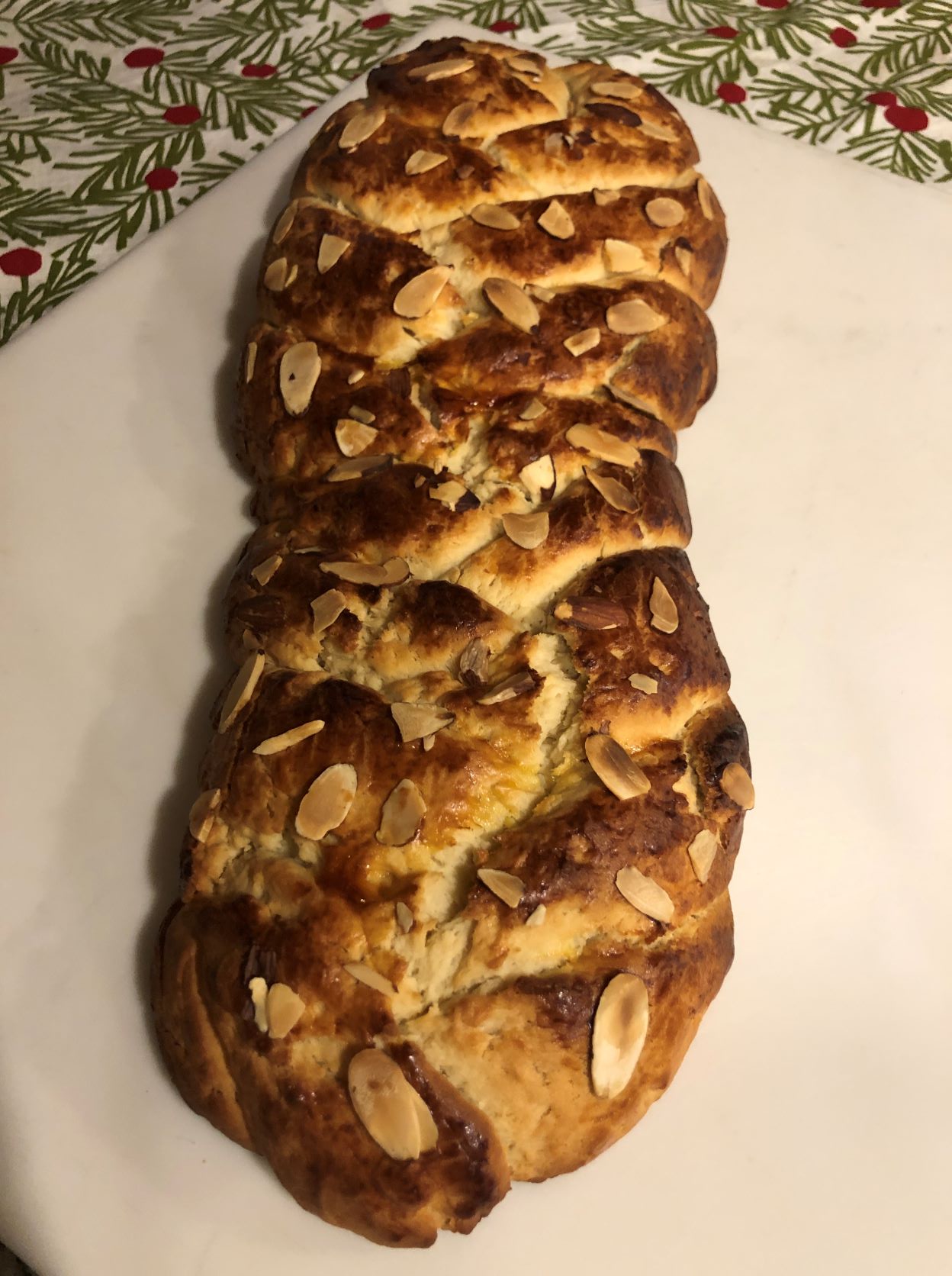
Our family stories are filled with memories of great good, many of which are family traditions handed down from our ancestors. Vianočka is a Czech/Slovak Christmas bread, similar to other Christmas breads that I enjoyed in my childhood. My Mother and later myself, would make a Norwegian version Julakake.

Global Slovakia hosted an online cooking class last December taught by Lenka of wanderingsenses.com, walking through the making of this delicious, light bread. This was the first time I ever braided a bread. It wasn’t perfect, but pretty good for a first attempt. As I was making, and later eating, this bread, it made me wonder if this was a bread that my Czech and Slovak ancestors would have made.

Vianočka

INGREDIENTS:
  • 500g all-purpose or pastry flour
  • 220-250g whole milk, at room temperature
  • 30g fresh yeasts or 12g active dry yeasts
  • 100g sugar, white
  • 110g butter, unsalted, melted and cooled down
  • 2 egg yolks, at room temperature
  • 1 whole egg, at room temperature
  • 8g salt
  • Zest from 1 lemon
  • 2 tablespoons rum-soaked raisins, optional
  • 1 tablespoon almond slices
  • 1 whole egg, for egg wash
  • 1 tablespoon powdered sugar, for dusting
DIRECTIONS:

1. Start with pre-hydrating your yeasts. In a small bowl combine together 100g of milk with 20g of sugar. Heat it up until warm (not boiling) and stir a couple times to dissolve the sugar. Mix in 12g of dry or 30g of fresh yeasts, cover the bowl with a clean towel/ clean plate and let it rest for ~ 10 minutes until frothy

2. In a meantime, in the bowl of your standing mixer or in any bigger mixing bowl combine together 500g of flour (sift the flour into the bowl), 80g of sugar, 8g of salt and zest from 1 lemon. Mix well with a spoon or whisk. Pour in 120g of milk (eventually you might add another 20-30g of Milk, depending on the texture of the dough), 110g of melted butter, 2 egg yolks, 1 whole egg and yeasts mixture. Start kneading the dough with a hook attachment or with your hand for approximately 8-10 minutes until fully incorporated, smooth, silky and not sticking to your hands or to the sides of your standing mixer. Try to resist from adding unnecessary extra flour to the dough. After a few minutes of kneading you’ll start strengthening a gluten and the dough will become more elastic and less sticky. Cover the bowl with a clean towel or plate and let it prove in a warm place for next 60-90 minutes or until double in size

3. Once the dough is well proved, it’s time to shape Vianočka. Divide the dough into 5 equal-size balls and if you’re using Rum-soaked raisins, divide them equally and incorporate into individual doughs at this stage. Roll each of 5 dough balls out into five equal-length coils (long ~ 40cm/ 16 inch). Braid 3 coils together into a tail and transfer it carefully on a sheet pan lined with parchment paper. Twist rest two coils around each other and place them on top of the three-coil tail and tackle to hold together. Cover your Vianočka with a clean towel and let it prove for the the second time for ~ 45 minutes to one hour

4. To bake Vianočka, preheat the oven to 400° Fahrenheit/ 200° Celsius. Brush your bread generously with an Egg Wash and sprinkle your Vianočka with some Almond Slices. Place it into the oven and immediately lower the temperature to 375° Fahrenheit/ 190° Celsius. Bake for ~ 35-45 minutes, depending on the size of your Vianočka Once baked, let it cool down, dust with some Powdered Sugar (if preferred), slice and enjoy with a cup of tea or coffee by itself or with a butter & jam on top

Recipe from Wanderingsenses.com

Instruction provided through Global Slovakia

Casseroles · Czech Heritage and Dishes · Meats

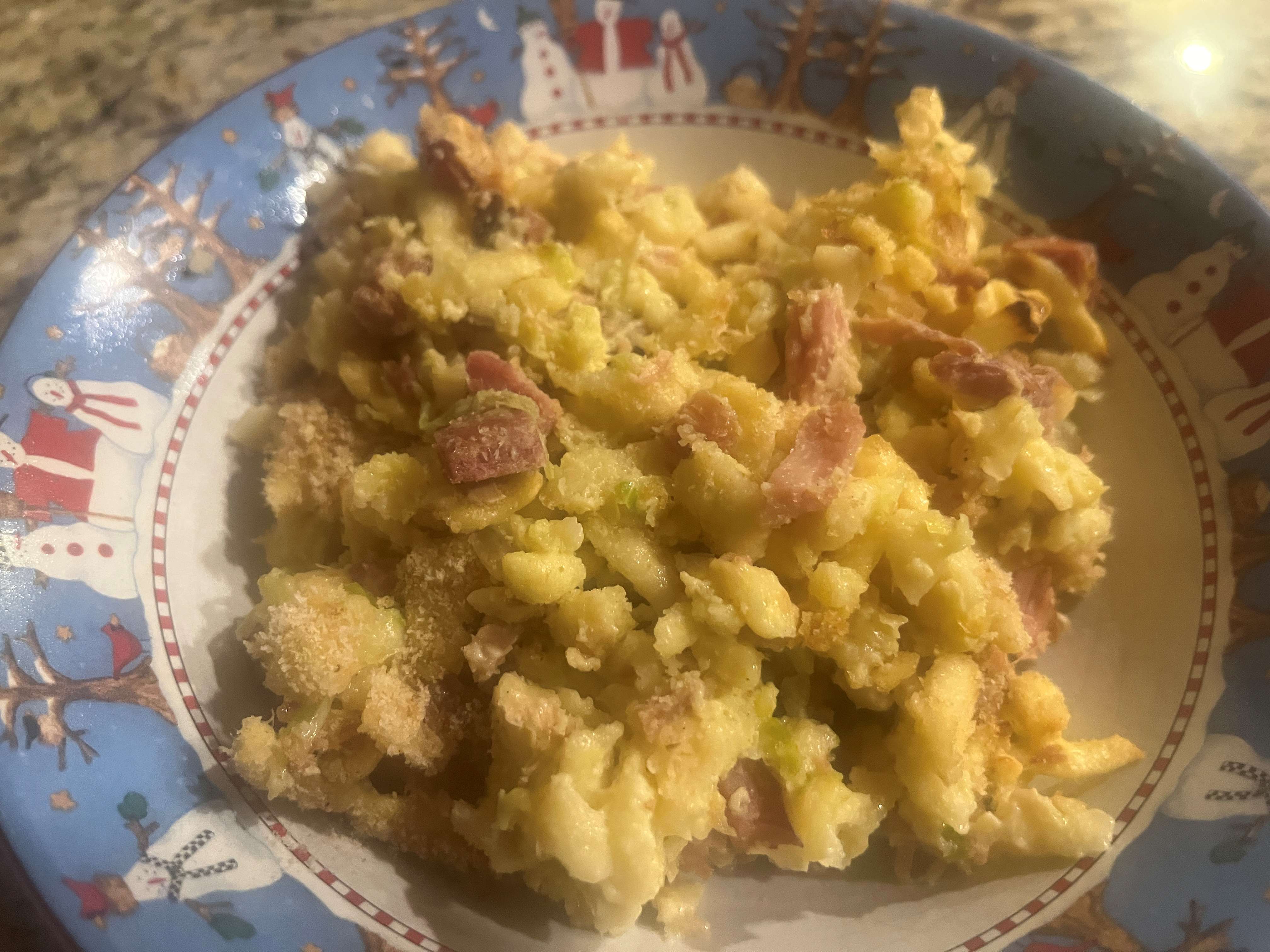
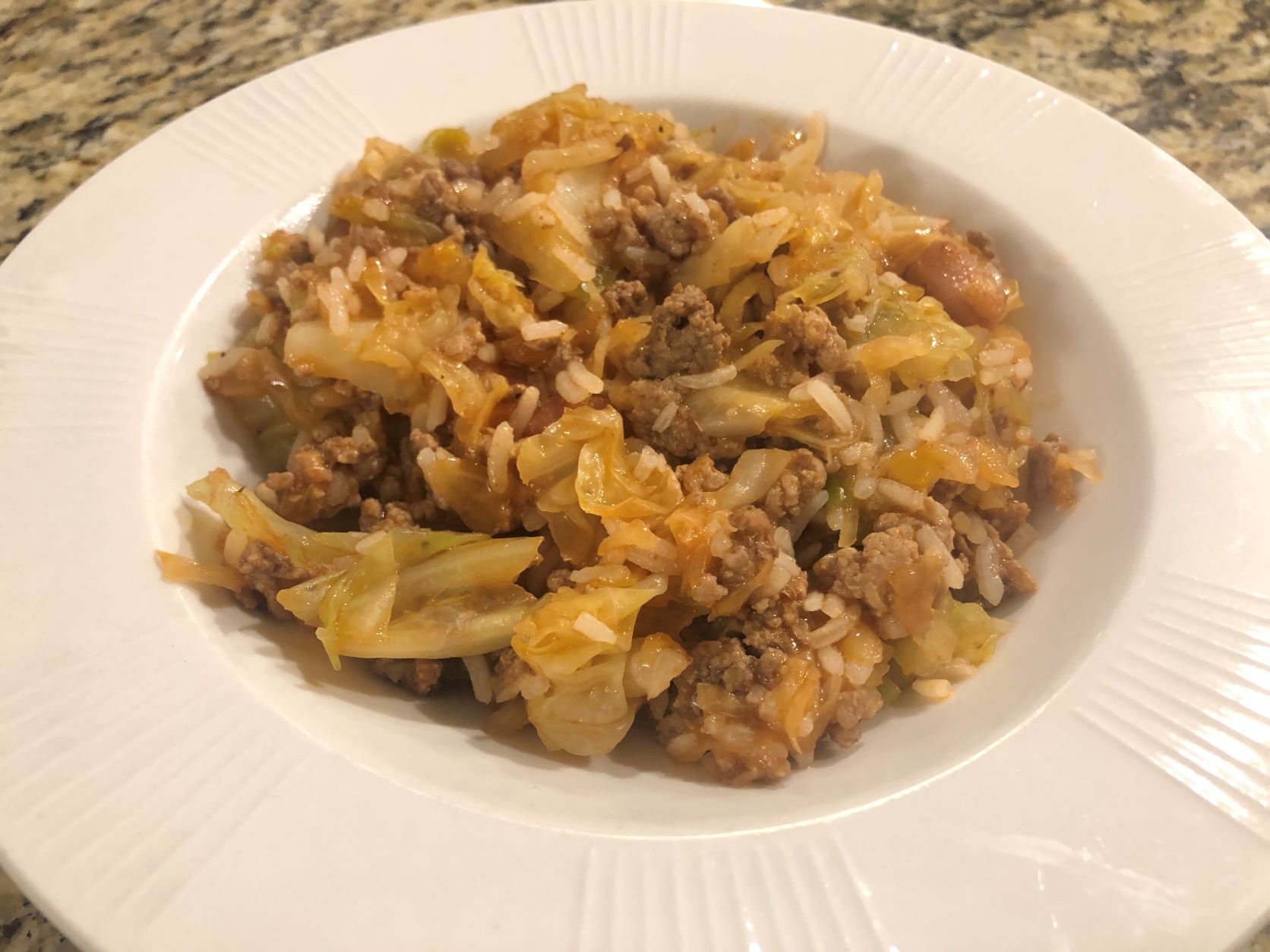
Deconstructed Stuffed Cabbage

Cabbage must be a part of my Czech/Slovak DNA because I love cabbage and sauerkraut. Cabbage rolls are so delicious, but I don’t have the desire to make the rolls, just enjoy the savory ingredients. This recipe was just what I was looking for. Even my 3-year-old granddaughter likes it. She must have inherited that piece of my DNA as well!

I made half of a recipe and used half ground pork and half ground beef, no veal.

Deconstructed Stuffed Cabbage

INGREDIENTS:
  • 1 cup uncooked white rice (or any rice of your choice)
  • 2 pounds green cabbage, cleaned, cored and cut into two-inch chunks
  • 2 tablespoons extra virgin olive oil
  • 4 ounces raw bacon diced
  • 1 cup chopped onion
  • 1 tablespoon garlic, minced
  • 2 tablespoons tart red wine such as Merlot
  • 1 pound lean ground beef (90/10)
  • ½ pound ground pork
  • ½ pound ground veal (if you can’t get ground veal, increase ground pork to one pound)
  • 3 cups tomato juice (or for a more intense flavor, use V-8)
  • 1 6-ounce can tomato paste
  • 2 tablespoons white wine vinegar
  • 1 tablespoon sugar
  • 1 teaspoon dry thyme
  • ¼ teaspoon paprika
  • 1 teaspoon salt
  • ¼ teaspoon freshly ground black pepper
  • 1 cup drained sauerkraut
DIRECTIONS:
  1. Cook rice according to package directions. Try to time the rice so that it finishes cooking as the preparation of the dish nears the end. If rice is finishes too soon, fluff and leave at room temperature to cool.
  2. Bring a large pot of salted water to a boil and blanch cabbage chunks for five minutes. Drain, cool and set aside.
  3. In a large sauté pan over medium heat, place olive oil and bacon and cook until bacon is almost browned, about 4 minutes. Increase heat to medium high and add onions and sauté for three minutes. Add garlic and sauté for one more minute. Add red wine and deglaze the pan.
  4. Move the cooked onion mixture to the edges of the pan and place all three meats into the center. Keep moving the meat around to brown and slowly work in onion mixture until the meat is fully browned.
  5. Add tomato juice, tomato paste, vinegar, sugar, thyme, paprika, salt and pepper. Reduce to medium and simmer for five minutes.
  6. Add in sauerkraut, cooked rice and cooked cabbage. Bring back up to heat and simmer for five more minutes.
  7. Adjust seasoning and serve.

Recipe from Afamilyfeast.com

Czech Heritage and Dishes · Meats

Iowa Chops in the Slow Cooker

Iowa Chops in the Slow Cooker has become one of my go-to recipes. It’s easy to prepare and simmer throughout the day. Serve with steamed baby potatoes or boiled perogies. I also served with roasted butternut squash and brussel sprouts. The pork is so fork-tender and will melt in your mouth.

Iowa Chops in the Slow Cooker

INGREDIENTS:
  • 4 Iowa chops (thick boneless pork chops–I get mine at Costco)
  • salt & pepper
  • 1+ cups frozen pearl onions
  • 1 can mushroom soup
  • 1/2 cup sour cream
  • 1 teaspoon Bohemian rub seasoning (available from Savory Spice Shop)
DIRECTIONS:
  1. Place Iowa chops in slow cooker and sprinkle with salt and pepper.
  2. Add frozen onions to slow cooker.
  3. Combine soup, sour cream, and Bohemian rub seasoning and pour over pork chops and onions.
  4. Cook on low for 8 hours.

Czech Heritage and Dishes · Soups and Stews

Simple Sauerkraut Soup

Sauerkraut Soup is a wonderful winter meal, reminding me of my Czech roots and of my Mother’s homemade sauerkraut.  I’m obsessed with trying new recipes, particularly those of my family roots.

I have followed TresBohemes.com for some time and enjoy their stories and recipes.  This one is delicious and easy to make.  As they say in the Czech Republic, Dobrou chuť (Enjoy Your Meal)!

SIMPLE SAUERKRAUT SOUP

1/2 tablespoon duck fat (you can use butter or olive oil if you prefer)
1 Polish Kielbasa, sliced
2 large potatoes, peeled and diced
1 jar sauerkraut (lightly rinsed and drained)
1 cup fresh cabbage, thinly sliced
1 tablespoon paprika
1 teaspoon garlic powder
salt and pepper
water to cover
2 tablespoons flour
2 tablespoons butter
Sour Cream

  • In a large soup pot, melt the duck fat over medium heat.
  • Add the klobasa and cook until lightly browned.
  • While the klobasa is cooking, peel and cut the potatoes.
  • Once the potatoes are diced, add them to the pot.
  • Next add the sauerkraut and fresh cabbage.
  • Stir everything together.
  • Now add the paprika, garlic powder, salt, and pepper.
  • Stir again and then add water until all of the ingredients are covered (you may add more or less water depending on how thick you like your soup).
  • Next raise the heat to high and bring the soup to a boil.
  • Once the soup has reached a boil reduce the heat to low, cover with a lid, and simmer for 1 to 1 1/2 hours.
  • The soup is finished when the potatoes and cabbage are soft.
  • To thicken the soup slightly and to give it a creamier texture, I like to make a rue once the soup is cooked.
  • To make the rue, cook the flour in a small pan over high heat, stirring continually, until it turns a light brown color. Then add the butter, continuing to stir the mixture until it forms a thick golden paste. At this point you should remove the pan from the heat.
  • Now add a ladle of the soup liquid into the rue and stir it until combined. Repeat this step until the rue has thinned in consistency. Once you have added 3 or 4 ladles of the soup liquid to the rue, you may pour the rue into the soup and stir to combine.
  • Serve garnished with a spoon of sour cream and a slice of Czech rye bread.

Recipe from tresbohemes.com