Beverages · Czech Heritage and Dishes · Garden · Health · Home

Linden Flower Infusion and Tea

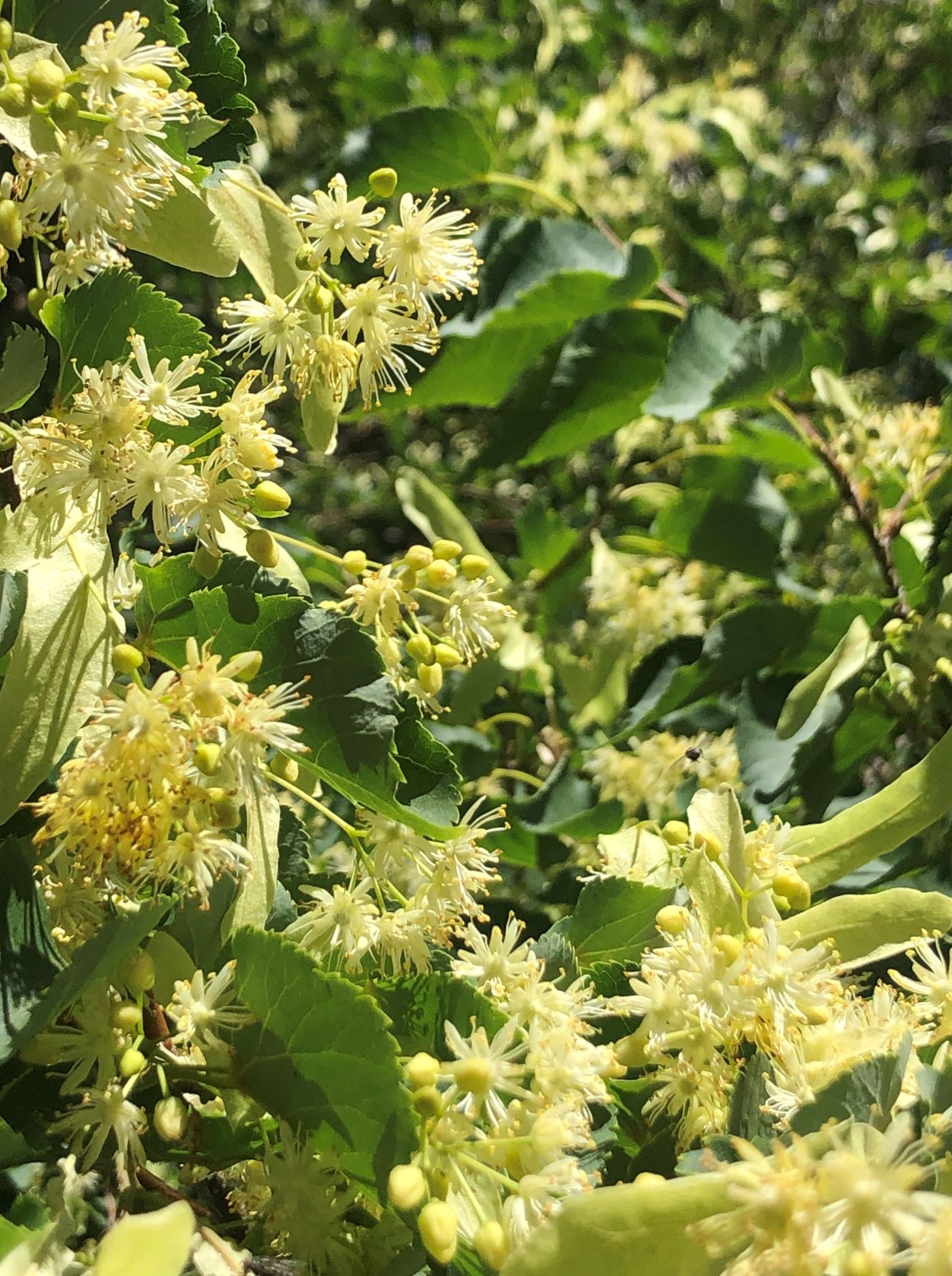
In 1988, we bought our home with a beautiful tree in the front yard. The Linden tree has provided beautiful shade for our front yard, a marvelous climbing tree for my children and grandchildren, amazing fragrance when the tree is in bloom, pollen for the honeybees, symbolic heart-shaped leaves, and now a wonderful source for a Linden infusion and tea.

I have felt a tremendous kinship to this beautiful tree for years. Little did I know that dried Linden leaves have medicinal beneficial. Benefits of the tea or infusions are reduced stress and anxiety and help with gut issues.

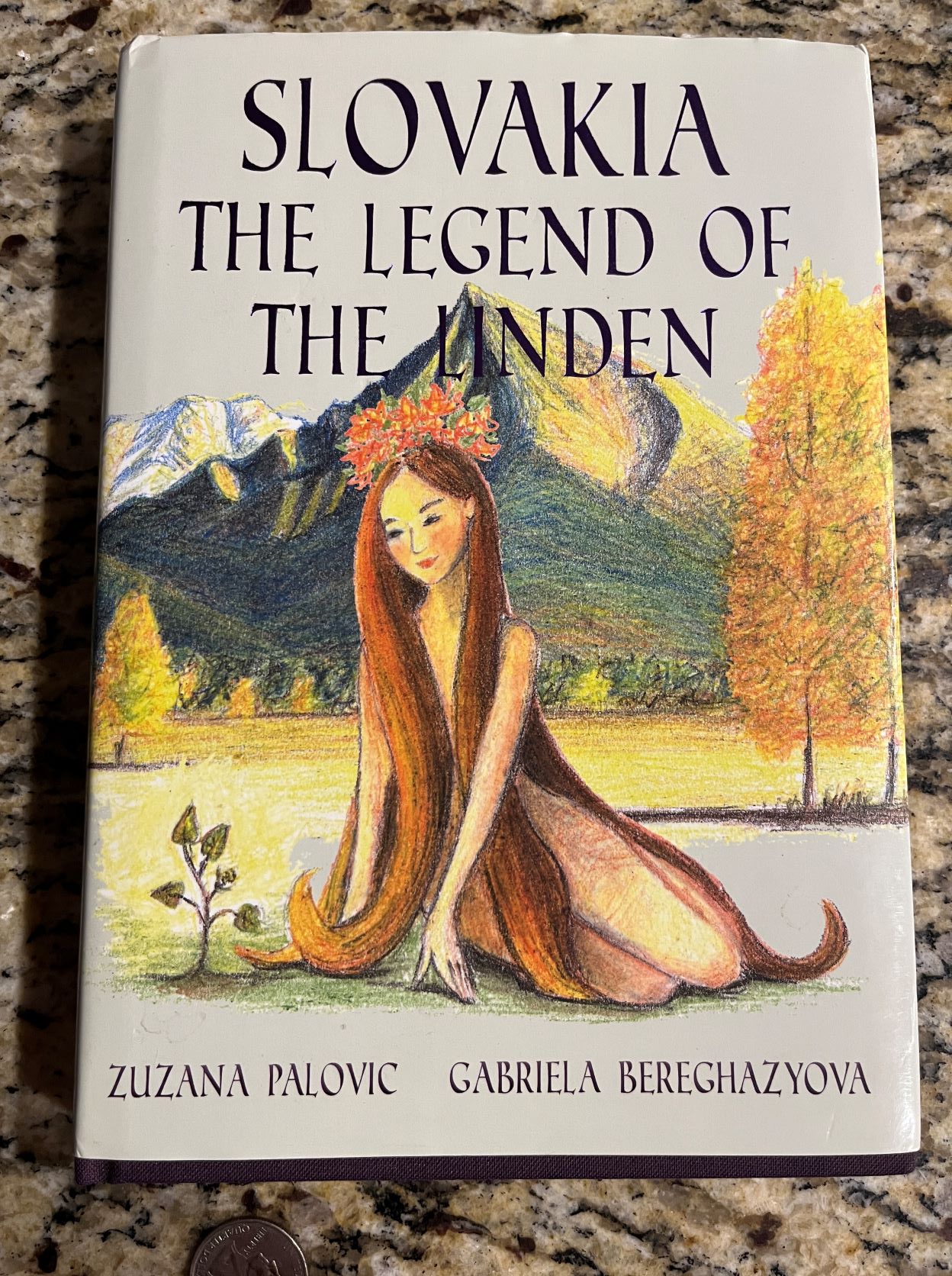
The Linden tree is a beloved symbol of the Slovak people, part of my heritage. In the book, ‘Slovakia, The Legend of the Linden” written by Zuzana Palovic and Gabriela Bereghazyova, shares the history and symbolism of this beautiful relationship. On page 5 of their book, is a beautiful description:

“INTRODUCTION: THE SACRED LINDEN CODE The land we know as Slovakia is protected by an all-powerful symbol, the Linden tree and its heart-shaped leaf. For centuries, the sacred icon has represented the heartfel essence of hte Slovak people. It is a code that captures th narrative of a nation. The heart-shaped emblem masterfully unites the humanity, geography and heritage of the region.”

If you are fortunate enough to have access to a Linden tree, take advantage of the few days that the tree blooms and collects blossoms to dry and enjoy as a tea or infusion. It’s worth the trouble.
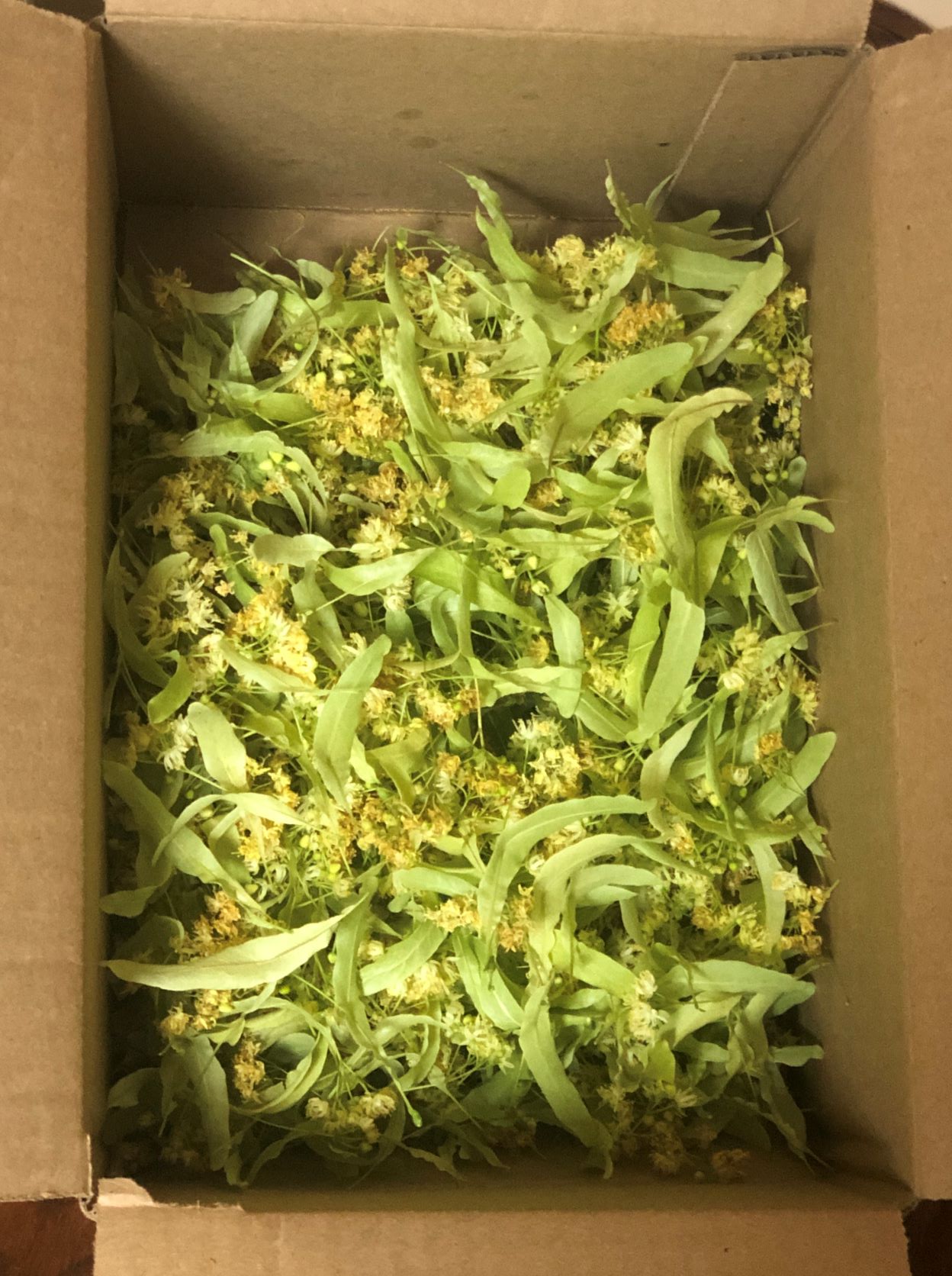
Linden Flower Infusion and Tea

INGREDIENTS:
  • Dried Linden Flowers
  • Boiling Water
DIRECTIONS:
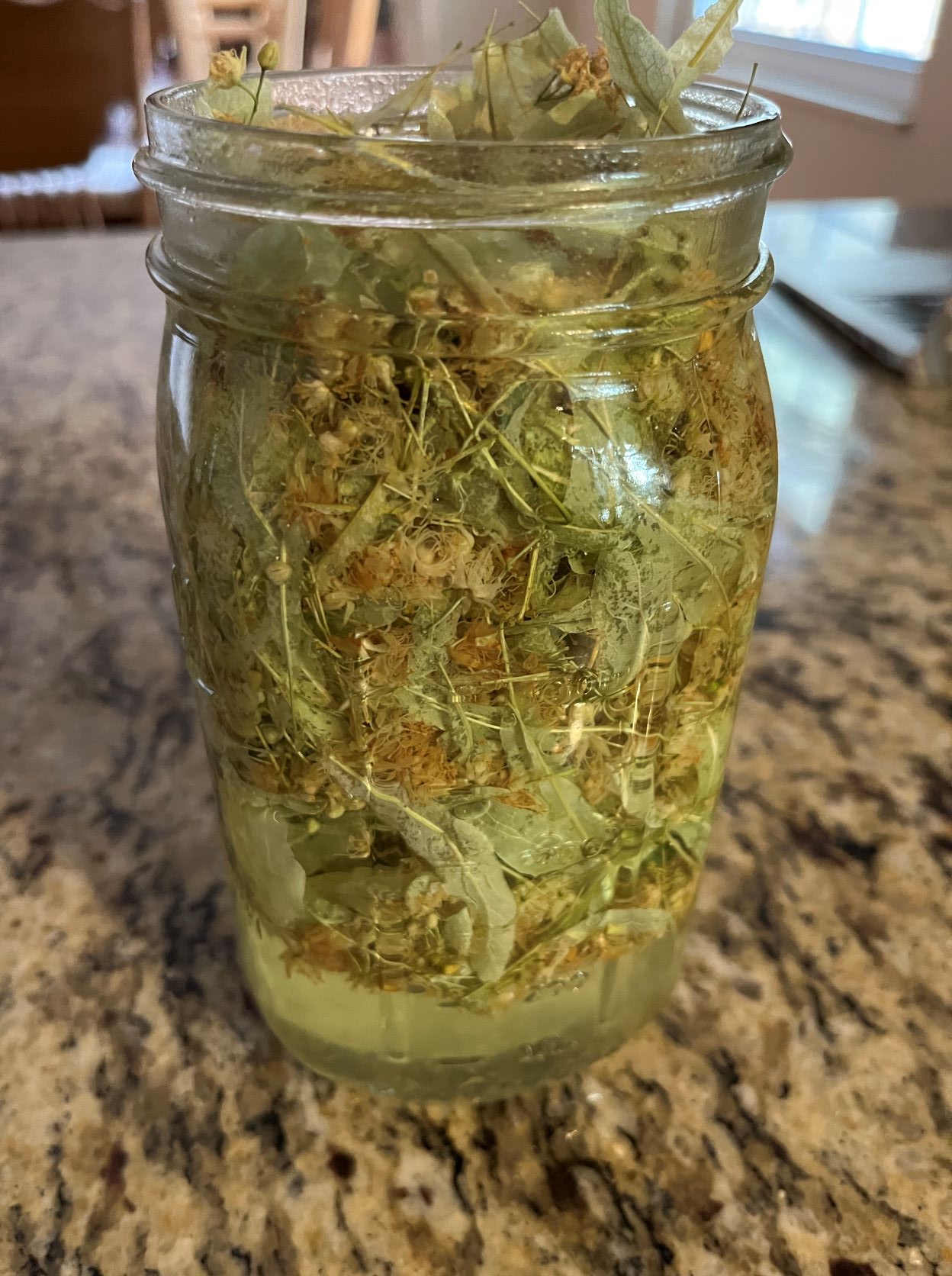
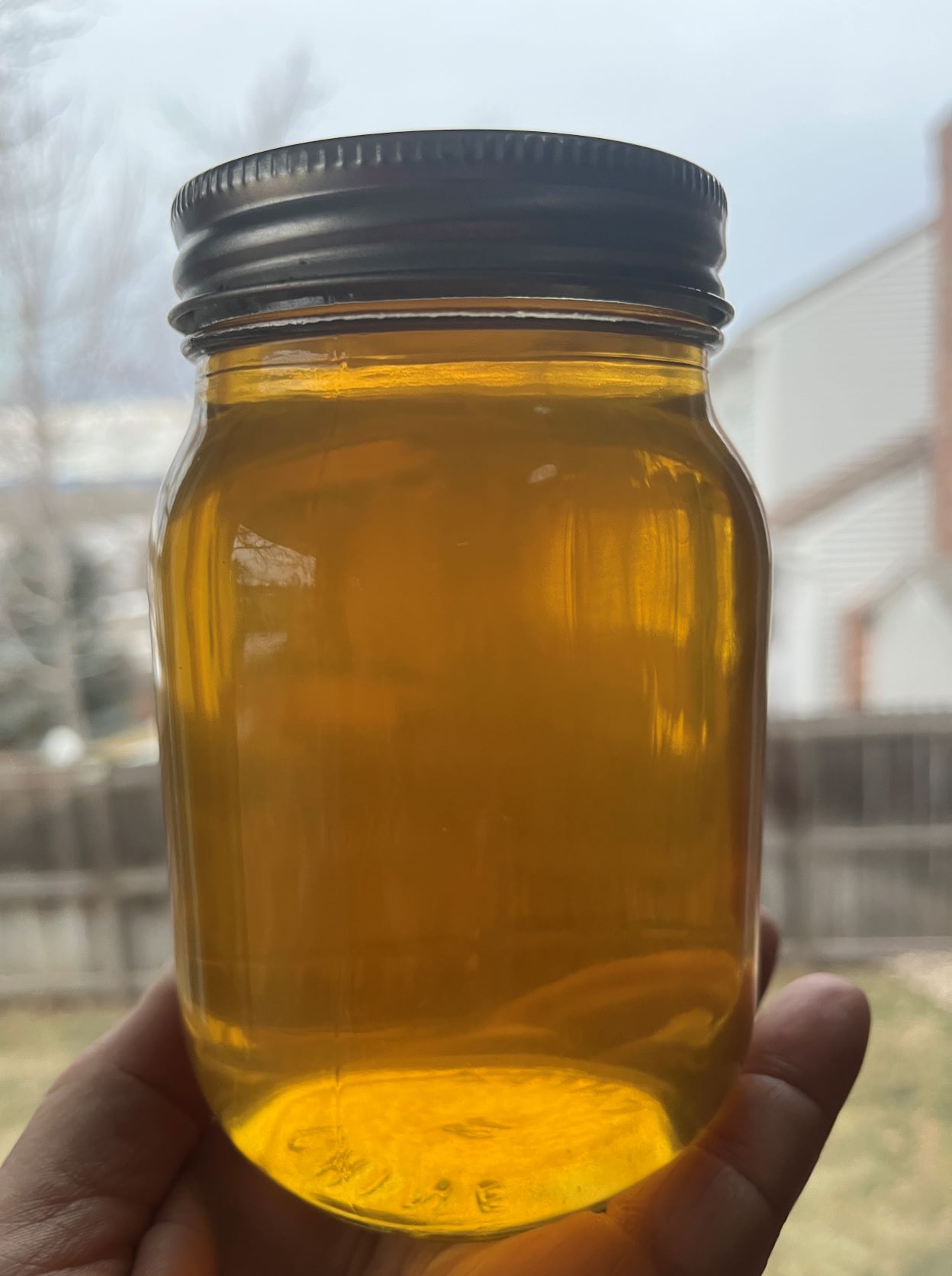
  1. Linden Flower Infusion: Place 1/2 to 1 ounce of dried Linden flowers in a 1 quart Ball jar. Boil water and slowly fill Ball jar. Cap and let steep for 24 hours. After 24 hours, strain. Optional: Bring liquid to a second boil. Cool. Use the infusion over the next 2-3 days. (Note: I wonder if the infusion could be frozen for later use.)
  2. Linden Flower Tea: Place 3 tsp. of dried Linden flowers in a tea infuser. Add 1 cup boiling water and let steep for 10 minutes. Optional: Enjoy with lemon or honey.

Eagle Song Gardener Luli’s Homestead Global Slovakia and the Legend of the Linden Wikipedia/Tilia or Linden

Breads · Czech Heritage and Dishes · Holidays

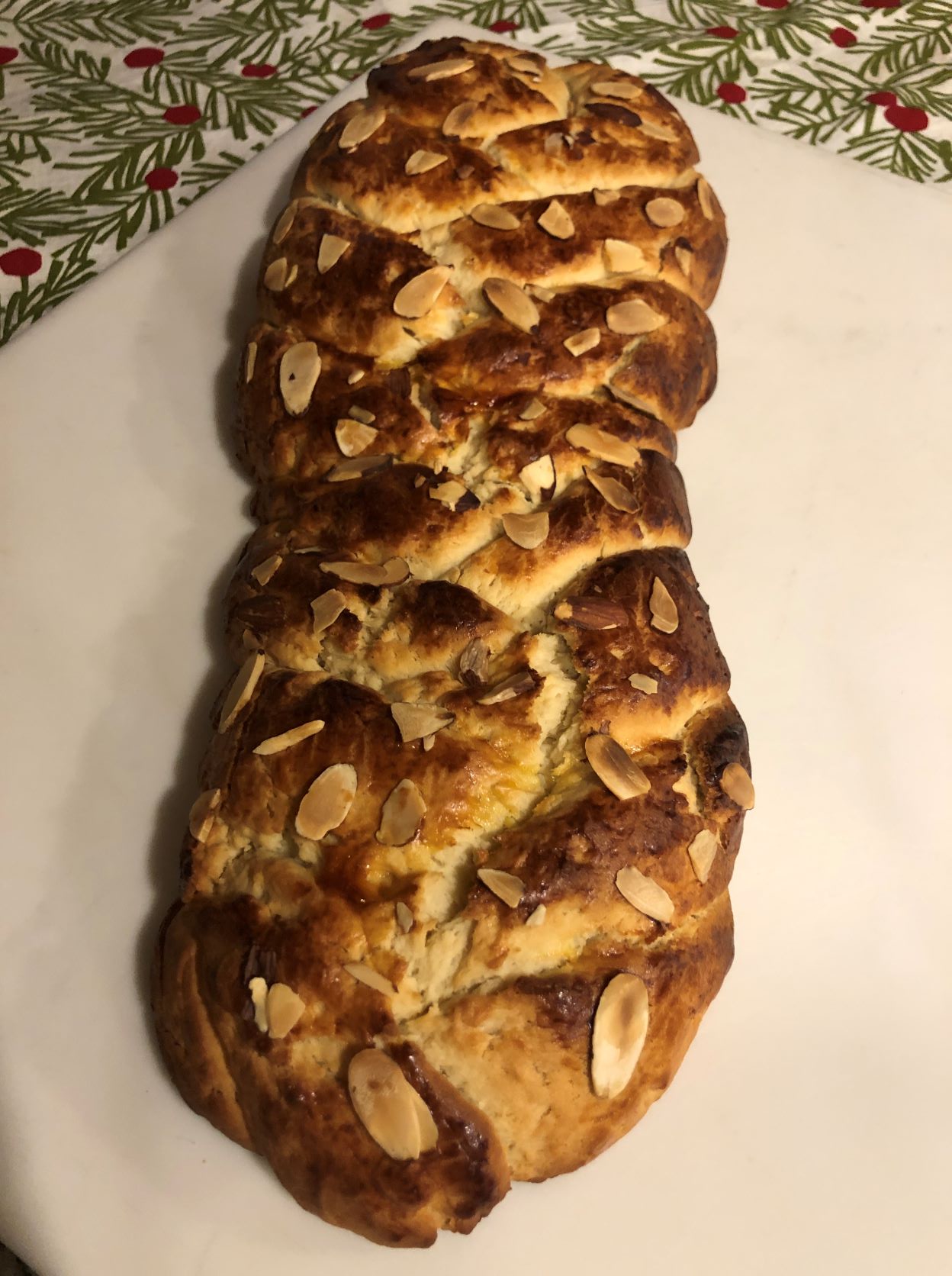
Vianočka

Our family stories are filled with memories of great good, many of which are family traditions handed down from our ancestors. Vianočka is a Czech/Slovak Christmas bread, similar to other Christmas breads that I enjoyed in my childhood. My Mother and later myself, would make a Norwegian version Julakake.

Global Slovakia hosted an online cooking class last December taught by Lenka of wanderingsenses.com, walking through the making of this delicious, light bread. This was the first time I ever braided a bread. It wasn’t perfect, but pretty good for a first attempt. As I was making, and later eating, this bread, it made me wonder if this was a bread that my Czech and Slovak ancestors would have made.

Vianočka

INGREDIENTS:
  • 500g all-purpose or pastry flour
  • 220-250g whole milk, at room temperature
  • 30g fresh yeasts or 12g active dry yeasts
  • 100g sugar, white
  • 110g butter, unsalted, melted and cooled down
  • 2 egg yolks, at room temperature
  • 1 whole egg, at room temperature
  • 8g salt
  • Zest from 1 lemon
  • 2 tablespoons rum-soaked raisins, optional
  • 1 tablespoon almond slices
  • 1 whole egg, for egg wash
  • 1 tablespoon powdered sugar, for dusting
DIRECTIONS:

1. Start with pre-hydrating your yeasts. In a small bowl combine together 100g of milk with 20g of sugar. Heat it up until warm (not boiling) and stir a couple times to dissolve the sugar. Mix in 12g of dry or 30g of fresh yeasts, cover the bowl with a clean towel/ clean plate and let it rest for ~ 10 minutes until frothy

2. In a meantime, in the bowl of your standing mixer or in any bigger mixing bowl combine together 500g of flour (sift the flour into the bowl), 80g of sugar, 8g of salt and zest from 1 lemon. Mix well with a spoon or whisk. Pour in 120g of milk (eventually you might add another 20-30g of Milk, depending on the texture of the dough), 110g of melted butter, 2 egg yolks, 1 whole egg and yeasts mixture. Start kneading the dough with a hook attachment or with your hand for approximately 8-10 minutes until fully incorporated, smooth, silky and not sticking to your hands or to the sides of your standing mixer. Try to resist from adding unnecessary extra flour to the dough. After a few minutes of kneading you’ll start strengthening a gluten and the dough will become more elastic and less sticky. Cover the bowl with a clean towel or plate and let it prove in a warm place for next 60-90 minutes or until double in size

3. Once the dough is well proved, it’s time to shape Vianočka. Divide the dough into 5 equal-size balls and if you’re using Rum-soaked raisins, divide them equally and incorporate into individual doughs at this stage. Roll each of 5 dough balls out into five equal-length coils (long ~ 40cm/ 16 inch). Braid 3 coils together into a tail and transfer it carefully on a sheet pan lined with parchment paper. Twist rest two coils around each other and place them on top of the three-coil tail and tackle to hold together. Cover your Vianočka with a clean towel and let it prove for the the second time for ~ 45 minutes to one hour

4. To bake Vianočka, preheat the oven to 400° Fahrenheit/ 200° Celsius. Brush your bread generously with an Egg Wash and sprinkle your Vianočka with some Almond Slices. Place it into the oven and immediately lower the temperature to 375° Fahrenheit/ 190° Celsius. Bake for ~ 35-45 minutes, depending on the size of your Vianočka Once baked, let it cool down, dust with some Powdered Sugar (if preferred), slice and enjoy with a cup of tea or coffee by itself or with a butter & jam on top

Recipe from Wanderingsenses.com

Instruction provided through Global Slovakia

Czech Heritage and Dishes · New Favorite · Soups and Stews

Kettle Goulash

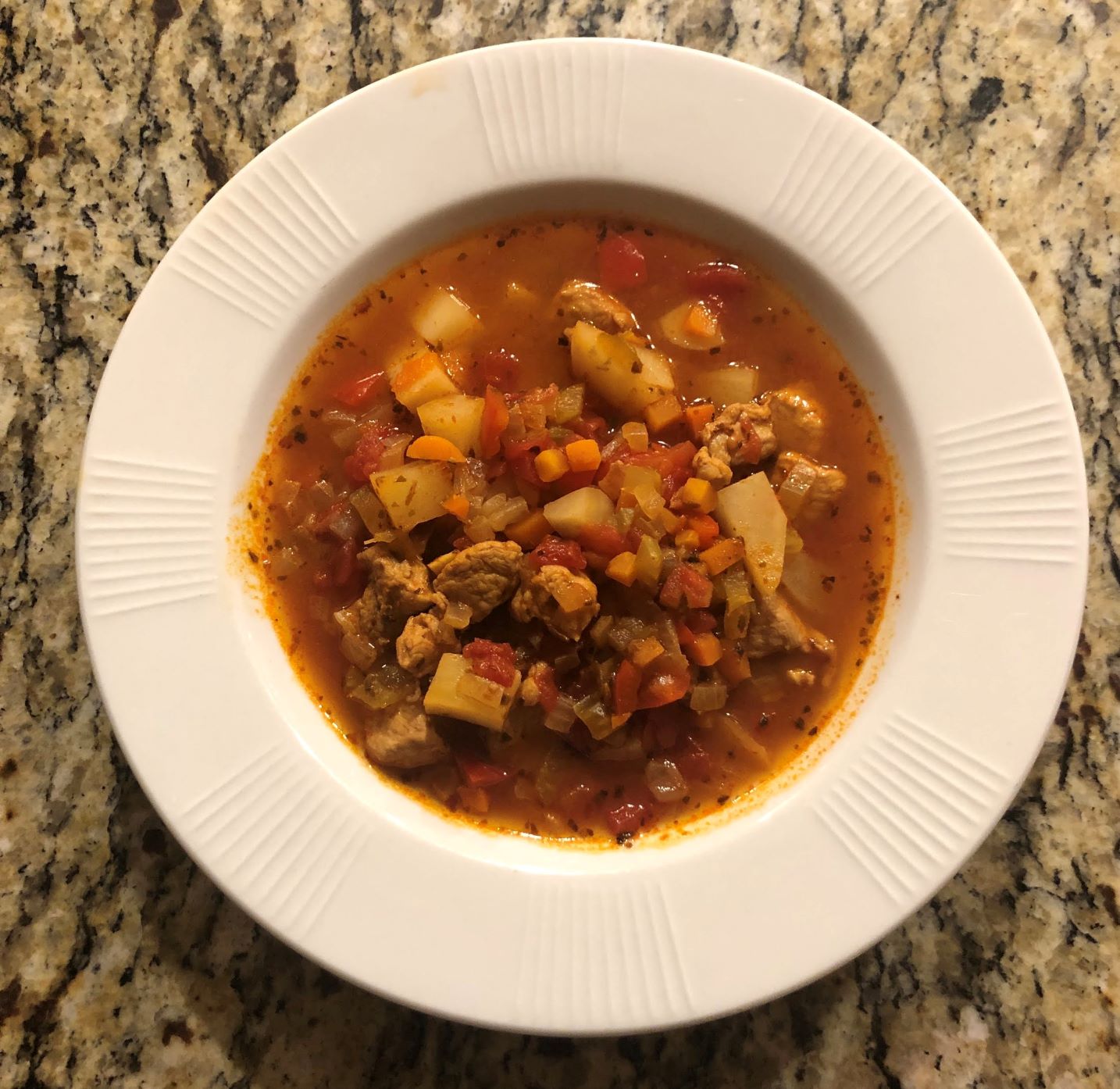
Over the past year, I have tried several versions of Hungarian/Slovak/Czech Goulash.  This recipe used pork and a lot of paprika and marjoram.  At first I was hesitant to use that much spice but, trust me, it’s worth it.  This flavorful Goulash soup is wonderful paired with a crusty bread.  

KETTLE GOULASH

1 ¼ lb. pork shoulder (you may substitute with beef or use half pork and half beef)  into 1-inch cubes
1 large onion, finely chopped
3 tbsp. lard or cooking oil
2 garlic clove, crushed
2 tbsp. paprika
1/2 tbsp. ground caraway seeds
1 tbsp. marjoram
12 oz. potatoes
1 medium carrot diced
2 stalks of celery chopped
1 medium parsley root diced (I substituted 1 chopped red pepper)
1 large tomato chopped (I substituted a 16 oz. can diced tomatoes)
1.5 liter (or 4.2 cups) water
Salt and pepper
  • Heat oil or lard in a large pot and cook the onions until translucent.
  • Add the meat and fry until it is pale brown and sealed.
  • Add parsley, carrot, celeriac, paprika, marjoram tomato and simmer over low heat until the meat is half cooked. (I added garlic at this point vs. later
  • Add water and simmer gently for another 30-40 minutes.
  • Add potatoes and cook for further 10-20 minutes until the potatoes are cooked.
  • At the very end, add the crushed garlic and cook for another minutes.
  • Turn off the heat and season with salt and pepper.
  • Serve hot.

Recipe slightly adapted from Global Slovakia course Slovakia: Beyond the Known

Czech Heritage and Dishes · Holidays · My Roots · Soups and Stews

Slovak Sauerkraut Soup

Czech and Slovak heritage is of great interest to me, given my Father’s family roots.  Late 2020, I participated in ‘Czech & Slovak Christmas’ offered through Global Slovakia Academy.  It was a wonderful class, offering education of the Slovak advent and holidays, celebrations and food.

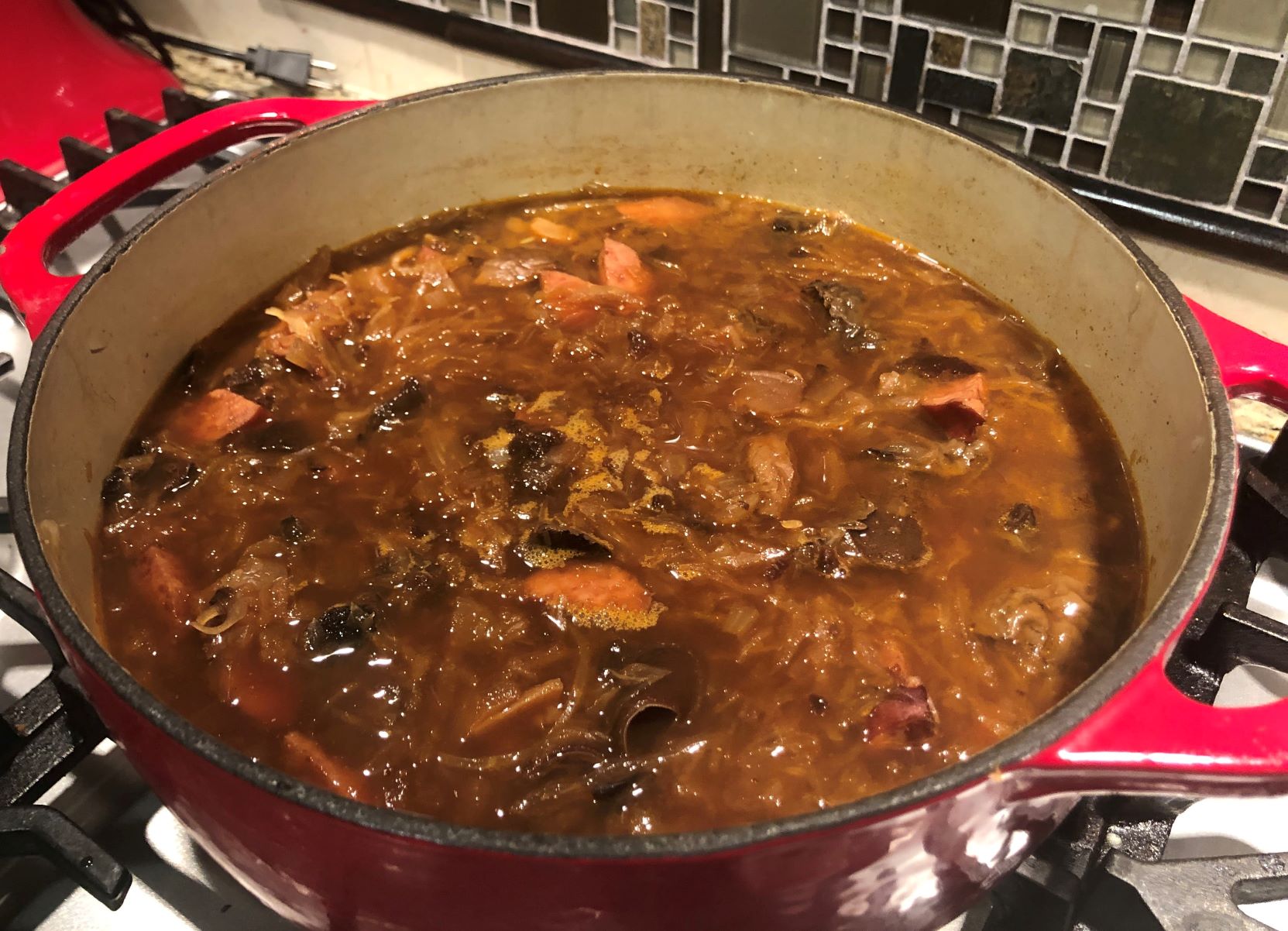
One of the recipes shared was this Slovak Christmas Sauerkraut Soup.  It is traditionally made for Christmas Eve. I was not willing to wait until next December to make the soup!  The ingredients are things our ancestors would have had on hand:  wild dried mushrooms, sauerkraut, smoked sausage, etc.

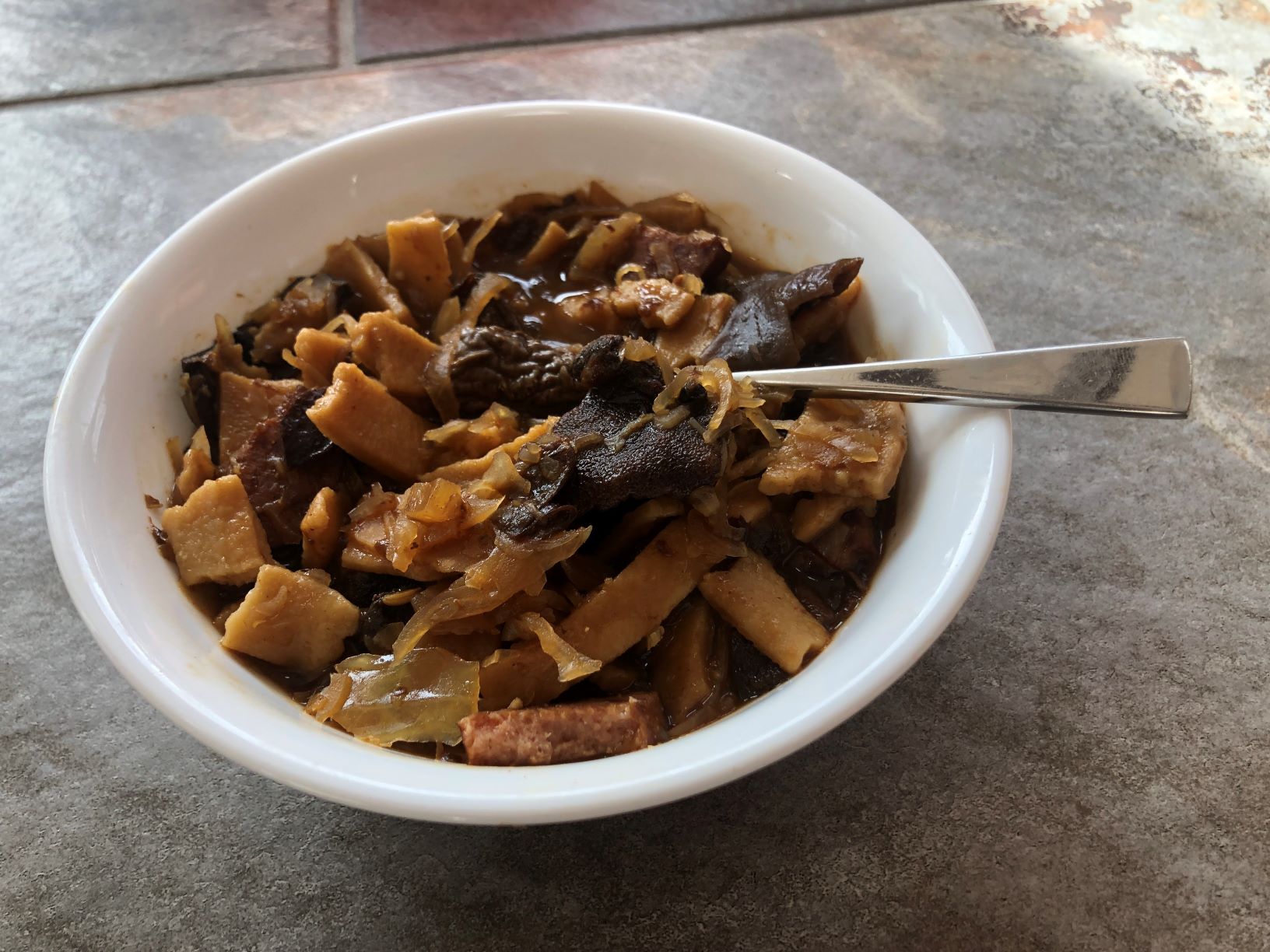
I love to tweek recipes and decided to add homemade egg noodles for the last hour of cooking and loved the addition.  The soup was thick enough, so I chose not to add the flour and additional water.  This is a hearty soup and great paired with a hearty roll or rye bread.

SLOVAK CHRISTMAS SAUERKRAUT SOUP

1 package (32 oz) sauerkraut
2 quarts chicken or beef broth
6 whole black peppercorns
4 bay leaves
2 cups of dried wild mushrooms
1 klobásaor chorizo (Note: I used Kielbasa)
½ cup pitted prunes
1 large onion chopped
3 tsp sweet paprika
2 tbsp vegetable oil
Optional:  2 tbsp plain flour and 1 cup water
Salt and pepper
Optional:  I added homemade egg noodles to the soup about an hour before serving
  • If you are not keen on the sour flavor of the sauerkraut, you can wash it before proceeding with the recipe. However, we do recommend keeping it as it is – this is when it contains the most goodness and gives the iconic flavor and smell to the soup. Fry the onion in a large pot over medium heat. Traditionally, Christmas Eve dinner was strictly meat-free. Leave klobása out if you wish to stick with the tradition.
  • Place the sauerkraut, broth, peppercorns, bay leaves, salt and mushrooms into a large pot and bring to a boil. Add the sausage, prunes, and paprika. Lower the heat to gentle simmer and allow to cook for at least 2 hours. Our grandmas used to set the soup on lowest heat and keep it simmering until dinner time. It fills the entire house with quintessentially Slovak Christmas smell. (Note:  I simmered the soup on low for 4 hours).
  • Remove the bay leaves from the soup and discard. Season to taste. Serve.