Cakes · Desserts

Perfect No-Bake Cheesecake with Homemade Lemon Curd

Daughter Megan did it again with this light, delicious no-bake cheesecake with homemade lemon curd and fresh strawberries. We had family in town for a visit and this dessert was a big hit with everyone. I’ll admit I do not care for traditional cheesecake since it so heavy, but not this version. And who makes their own lemon curd? Yes indeed, Megan does. Perhaps she needs to pursue her dream of a bake shop!

Perfect No-Bake Cheesecake with Lemon Curd

INGREDIENTS:
  • Graham Cracker Crust
  • 2 cups (240g) graham cracker crumbs (about 16 full sheet graham crackers)
  • 1/3 cup (67g) packed light or dark brown sugar
  • 1/2 cup (8 Tablespoons; 113g) unsalted butter, melted
  • 1 and 1/4 cups (300ml) heavy cream or heavy whipping cream
  • Cheesecake
  • three 8-ounce blocks (680g) full-fat cream cheese, softened to room temperature
  • 1/2 cup (100g) granulated sugar
  • 2 Tablespoons (15g) confectioners’ sugar
  • 1/4 cup (60g) sour cream, at room temperature
  • 2 teaspoons lemon juice
  • 1 teaspoon pure vanilla extract
DIRECTIONS:
  1. Make the crust: Stir the graham cracker crust ingredients together. Pour into a 9-inch springform pan or 10-inch springform pan and pack in very tightly. The tighter it’s packed, the less likely it will fall apart when cutting the cheesecake. I recommend using the bottom of a measuring cup to pack it into the bottom and up the sides. You can watch me do this in the video above. Freeze for 10–20 minutes as you prepare the filling.
  2. Make the filling: Using a hand mixer or a stand mixer fitted with a whisk attachment, whip the cold heavy cream into stiff peaks on medium-high speed, about 4–5 minutes. Set aside.
  3. Using a hand mixer or a stand mixer fitted with a whisk or paddle attachment, beat the cream cheese and granulated sugar together on medium speed until perfectly smooth and creamy. Scrape down the sides and up the bottom of the bowl with a rubber spatula as needed. Add the confectioners’ sugar, sour cream, lemon juice, and vanilla extract. Beat for 2–3 minutes on medium-high speed until smooth and combined. Make sure there are no large lumps of cream cheese. If there are lumps, keep beating until smooth.
  4. Using your mixer on low speed or a rubber spatula, fold the whipped cream into the cheesecake filling until combined. This takes several turns of your rubber spatula. Combine slowly as you don’t want to deflate all the air in the whipped cream.
  5. Remove crust from the freezer and spread filling into crust. Use an offset spatula to smooth down the top.
  6. Cover tightly with plastic wrap or aluminum foil and refrigerate for at least 6–8 hours and up to 2 days. For best results, 12 hours is best. I chill mine overnight. The longer refrigerated, the nicer the no-bake cheesecake will set up.
  7. Use a knife to loosen the chilled cheesecake from the rim of the springform pan, then remove the rim. Using a clean sharp knife, cut into slices for serving. For neat slices, wipe the knife clean between each slice.
  8. Serve cheesecake with desired toppings. Cover and store leftover cheesecake in the refrigerator for up to 5 days.

Homemade Lemon Curd

INGREDIENTS:

  • 4 large egg yolks (for thicker lemon curd, see Note on eggs)
  • 2/3 cup (134g) granulated sugar
  • 1 Tablespoon lemon zest (about 1 lemon)
  • 1/3 cup (80ml) fresh lemon juice (about 2–3 lemons)
  • 1/8 teaspoon salt
  • 6 Tablespoons (86g) unsalted butter, softened to room temperature and cut into 6 pieces

DIRECTIONS:

  1. Fill the bottom pot of your double boiler with 1–2 inches of water. (Or use the DIY double boiler method listed in the notes.) Place on high heat. Once the water begins to boil, reduce to low heat to keep the water at a simmer.
  2. Place egg yolks, granulated sugar, lemon zest, lemon juice, and salt into the top pot of your double boiler. Using a silicone whisk, whisk until completely blended, then continue to whisk as the curd cooks. Constant whisking prevents the egg yolks from curdling. Whisk and cook until the mixture becomes thick, resembling the texture of hollandaise sauce, about 10 minutes. If curd isn’t thickening, turn up the heat and constantly whisk.
  3. Remove pan from heat. Whisk the sliced butter into the curd. The butter will melt from the heat of the curd as you whisk. Pour curd into a jar or bowl and place a piece of plastic wrap directly on top so it is touching the top of the curd. (This prevents a skin from forming on top.) The curd will continue to thicken as it cools. Once cool, the plastic wrap can be removed.
  4. Refrigerate the curd for up to about 10 days.

Cheesecake Recipe from Sally’s Baking Addiction

Lemon Curd Recipes from Sally’s Baking Addiction

Breads · Czech Heritage and Dishes · Holidays

Vianočka

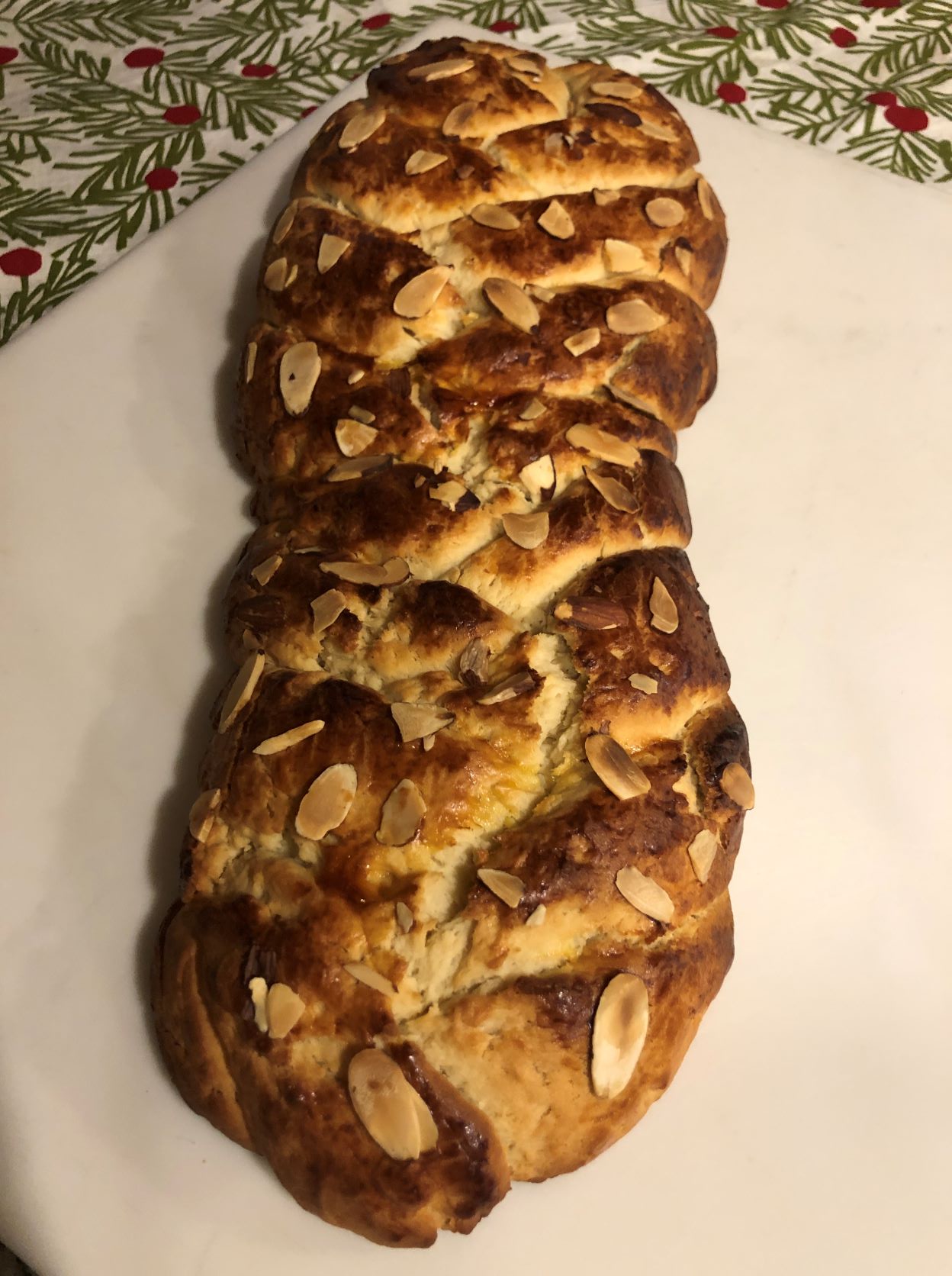
Our family stories are filled with memories of great good, many of which are family traditions handed down from our ancestors. Vianočka is a Czech/Slovak Christmas bread, similar to other Christmas breads that I enjoyed in my childhood. My Mother and later myself, would make a Norwegian version Julakake.

Global Slovakia hosted an online cooking class last December taught by Lenka of wanderingsenses.com, walking through the making of this delicious, light bread. This was the first time I ever braided a bread. It wasn’t perfect, but pretty good for a first attempt. As I was making, and later eating, this bread, it made me wonder if this was a bread that my Czech and Slovak ancestors would have made.

Vianočka

INGREDIENTS:
  • 500g all-purpose or pastry flour
  • 220-250g whole milk, at room temperature
  • 30g fresh yeasts or 12g active dry yeasts
  • 100g sugar, white
  • 110g butter, unsalted, melted and cooled down
  • 2 egg yolks, at room temperature
  • 1 whole egg, at room temperature
  • 8g salt
  • Zest from 1 lemon
  • 2 tablespoons rum-soaked raisins, optional
  • 1 tablespoon almond slices
  • 1 whole egg, for egg wash
  • 1 tablespoon powdered sugar, for dusting
DIRECTIONS:

1. Start with pre-hydrating your yeasts. In a small bowl combine together 100g of milk with 20g of sugar. Heat it up until warm (not boiling) and stir a couple times to dissolve the sugar. Mix in 12g of dry or 30g of fresh yeasts, cover the bowl with a clean towel/ clean plate and let it rest for ~ 10 minutes until frothy

2. In a meantime, in the bowl of your standing mixer or in any bigger mixing bowl combine together 500g of flour (sift the flour into the bowl), 80g of sugar, 8g of salt and zest from 1 lemon. Mix well with a spoon or whisk. Pour in 120g of milk (eventually you might add another 20-30g of Milk, depending on the texture of the dough), 110g of melted butter, 2 egg yolks, 1 whole egg and yeasts mixture. Start kneading the dough with a hook attachment or with your hand for approximately 8-10 minutes until fully incorporated, smooth, silky and not sticking to your hands or to the sides of your standing mixer. Try to resist from adding unnecessary extra flour to the dough. After a few minutes of kneading you’ll start strengthening a gluten and the dough will become more elastic and less sticky. Cover the bowl with a clean towel or plate and let it prove in a warm place for next 60-90 minutes or until double in size

3. Once the dough is well proved, it’s time to shape Vianočka. Divide the dough into 5 equal-size balls and if you’re using Rum-soaked raisins, divide them equally and incorporate into individual doughs at this stage. Roll each of 5 dough balls out into five equal-length coils (long ~ 40cm/ 16 inch). Braid 3 coils together into a tail and transfer it carefully on a sheet pan lined with parchment paper. Twist rest two coils around each other and place them on top of the three-coil tail and tackle to hold together. Cover your Vianočka with a clean towel and let it prove for the the second time for ~ 45 minutes to one hour

4. To bake Vianočka, preheat the oven to 400° Fahrenheit/ 200° Celsius. Brush your bread generously with an Egg Wash and sprinkle your Vianočka with some Almond Slices. Place it into the oven and immediately lower the temperature to 375° Fahrenheit/ 190° Celsius. Bake for ~ 35-45 minutes, depending on the size of your Vianočka Once baked, let it cool down, dust with some Powdered Sugar (if preferred), slice and enjoy with a cup of tea or coffee by itself or with a butter & jam on top

Recipe from Wanderingsenses.com

Instruction provided through Global Slovakia

Cookies and Bars · Family · Family Favorites · New Favorite

French Macarons by Daughter Megan

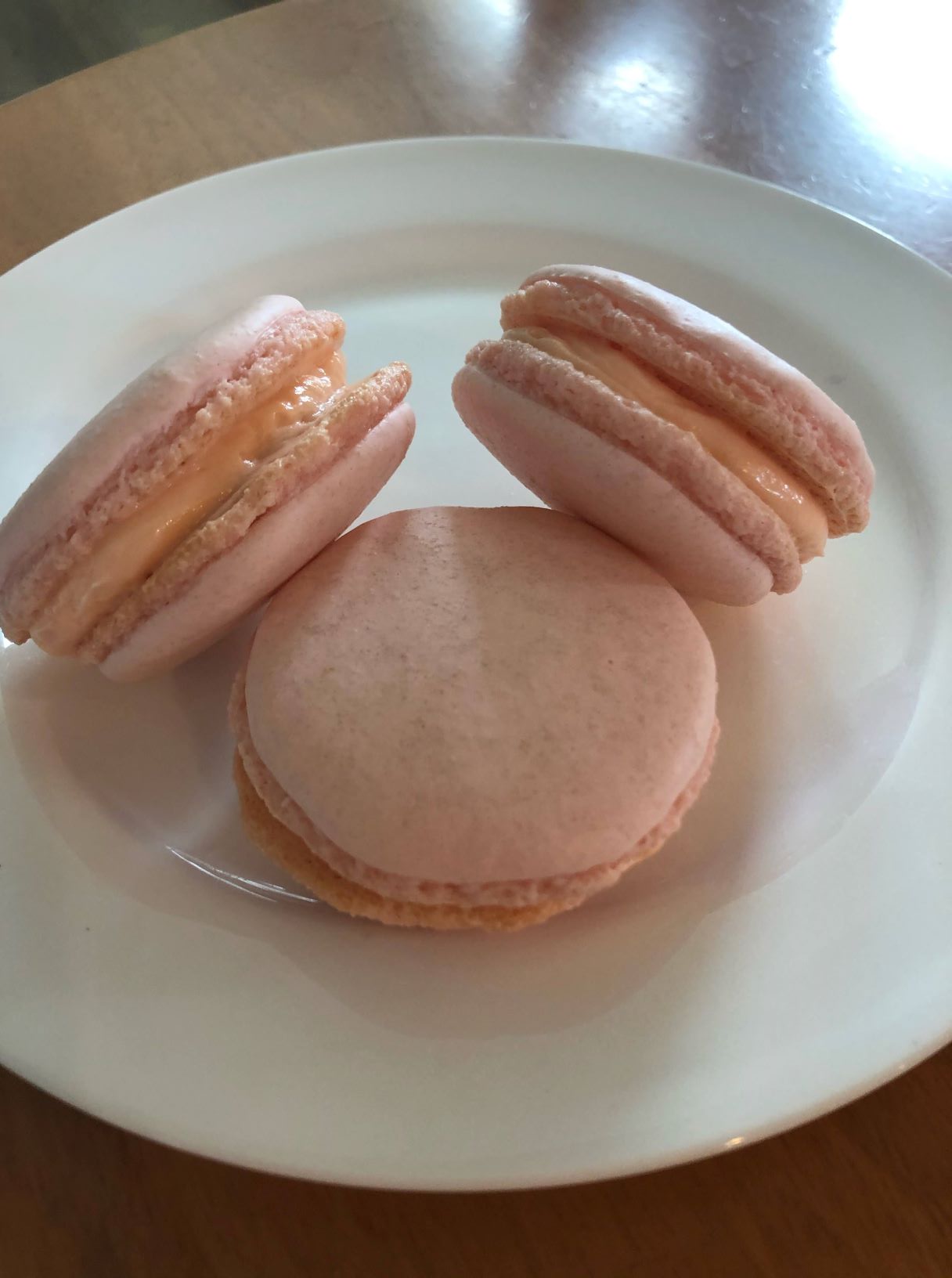
French Macarons are such a light, sweet delicacy.  I never would think of making them, yet, one day, my oldest daughter, Megan, called to say she’d had a dream about making Macarons and was going to bake them that very day.  Megan is the dessert maker in our family, always coming up with something new and delightful. Even so, I thought they would be extremely difficult, especially at Denver altitude.

Never fear!  The results were stunning and delectable.  The only change Megan made to the recipe was reducing the vanilla and adding almond extract to both the cookie and to the frosting. I’ll leave the Macaron making to Megan and praise (and enjoy) the results!

FRENCH MACARONS

For the Cookie

  • 100 g egg whites room temperature or 3 large eggs
  • 140 g almond flour or 1 1/2 cups
  • 90 g granulated sugar just under 1/2 cup
  • 130 g powdered sugar or 1 cup
  • 1 tsp. vanilla 5mL (Megan used 3/4 tsp. vanilla and 1/4 tsp. almond extract)
  • 1/4 tsp. cream of tartar 800mg

For the Buttercream

  • 1 cup unsalted butter softened 226g
  • 5 egg yolks
  • 1/2 cup granulated sugar 100g
  • 1 tsp. vanilla (Megan used 3/4 tsp. vanilla and 1/4 tsp. almond extract)
  • 3 tbsp. water 30mL
  • 1 pinch salt

Instructions

For the Macarons:

  • Sift the confectioners sugar and almond flour into a bowl.
  • Add the room temperature egg whites into a very clean bowl.
  • Using an electric mixer, whisk egg whites. Once they begin to foam add the cream of tartar and then SLOWLY add the granulated sugar.
  • Add the food coloring (if desired) and vanilla then mix in. Continue to beat until stiff peaks form.
  • Begin folding in the 1/3 of the dry ingredients.
  • Be careful to add the remaining dry ingredients and fold gently.
  • The final mixture should look like flowing lava, and be able to fall into a figure eight without breaking. Spoon into a piping bag with a medium round piping tip and you’re ready to start piping.
  • Pipe one inch dollops onto a baking sheet lined with parchment paper (this should be glued down with dabs of batter). Tap on counter several times to release air bubbles. Allow to sit for about 40 minutes before placing in oven.
  • Bake at 300F for 12-15 minutes, rotate tray after 7 minutes. Allow to cool completely before removing from baking sheet.

For the French Buttercream Filling:

  • Combine sugar and water in medium saucepan. Heat over low heat while stirring until sugar dissolves. Increase heat to medium- high and bring to a boil
  • Put egg yolks in a stand-mixer fitted with a whisk attachment and beat until thick and foamy.
  • Cook the sugar and water syrup until it reaches 240 degrees F. Immediately remove from heat. With mixer running, SLOWLY drizzle hot syrup into bowl with yolks.
  • Continue mixing until the bottom of the bowl is cool to the touch and the yolk mixture has cooled to room temperature.
  • Add in butter one cube at a time allowing each piece to incorporate before adding the next. Add vanilla and salt. Continue mixing until buttercream is smooth and creamy. (About 5-6 minutes.) Add food coloring if desired.

For Assembly

  • Pipe your filling onto the back of half the shells. Form a sandwich and repeat. Macarons should be aged in the fridge for 1-3 days for best results. This allows the filling to soften the shells inside.

Notes

  • THE MERINGUE!!!! That meringue HAS TO BE STIFF! I had no idea French meringue could be whipped to such a thick marshmallowy consistency but all it takes is a bit of extra whisking. You’ll notice the meringue start to fill the whisk when you’re getting close to the right stage.
  • Sift, Sift, SIFT! Those larger pieces of almond flour will mar the surface of your macarons. Best practice is to sift then whiz in the food processor and repeat two more times. Discard the larger particles, don’t try to press them through the sieve.
  • Use a scale if possible, accuracy helps with this recipe.
  • The mixing will take some practice, you will fold and fold the batter and then use the spatula to GENTLY press the batter against the bowl. You want to remove some of the bubbles but not to many… Continue this until it reaches a thick “lava” consistency. It should slowly fall off the spatula in ribbons and be able to form a figure eight without breaking.
  • Pipe the macarons perpendicular to the surface. If your tip is pointing a bit in any particular direction when you pipe the macarons might be oblong or malformed.
  • Add your coloring to the meringue after it reaches the soft peak stage.
  • When you are finishing the piping motion stop squeezing the bag and pull up with a circular motion.
  • The macarons will be best after 2-3 days resting in the fridge.
  • If you over-bake the shells and they’re too crisp, brush the bottom with some milk before assembly to soften them up.

Recipe adapted from Preppykitchen.com

New Favorite · Skinny · Vegan · Vegetarian

Fresh and Light Carrot Salad

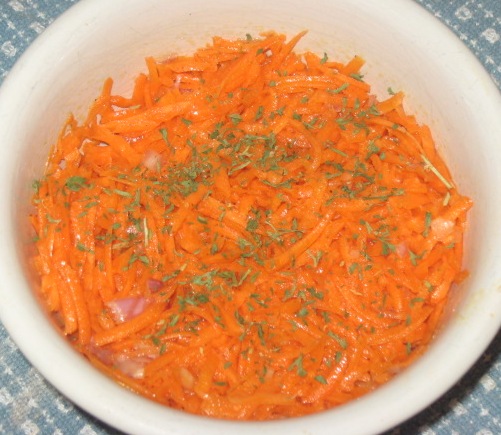
As the days get hotter, I crave light and cool foods (except for my occasional Mexican food craving). The Carrot Salad is light, simple and delicious.

IMG_5039

FRESH AND LIGHT CARROT SALAD

1 pound carrots
1/3 cup olive oil
1 tablespoon fresh lemon juice
1/4 teaspoon salt
1/4 teaspoon fresh ground pepper
1 small shallot finely chopped

  • Peel the carrots and shred in a food processor.
  • Whisk together olive oil, lemon juice, salt and pepper.  Stir in the shallots and pour over shredded carrots. Mix well.
  • Cover the salad and sit for a few hours for the flavors to blend.
New Favorite · Skinny · Vegan · Vegetarian

French Green Bean Salad…light and fresh!

Our Book Club meets every other month and tries to match the pot-luck cuisine to align with the story.  This month our book was ‘Sarah’s Key’. I loved this book!  If you’ve not read it, I highly recommend it.  The story takes place in France during WWII.  While food and cooking wasn’t the topic of the book, French Cuisine was the food du jour.

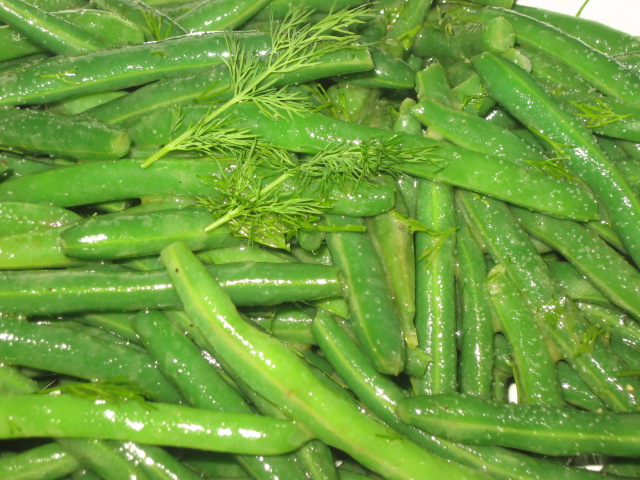
French cooking brings Julia Child to mind but I was looking for something light and fresh.  I was delighted to find a French Green Bean Salad that was perfect!

French Green Bean Salad

FRENCH GREEN BEAN SALAD

Kosher Salt
1 1/2 pounds fresh green beans
2 tablespoons Dijon mustard
2 tablespoon white wine vinegar
1/4 teaspoon freshly ground black pepper
1/2 cup olive oil
2 tablespoons minced fresh dill

Ingredients for French Green Bean Salad

  • Fill a large bowl with ice water. Bring a large pot of water to boil and add 1 tablespoon of kosher salt. Add the beans and cook for 1 minute only so the beans are crisp tender. Drain the beans and put them in the ice water until completely cool. Drain the beans again, dry on paper towels. Place the beans in a large bowl.
  • In a small bowl, whisk together the mustard, vinegar, 1/2 teaspoon salt and the pepper. While whisking, slowly add the olive oil to make an emulsion.

Dressing for French Green Bean Salad

  • Pour enough dressing over the beans to moisten them well, reserving the remaining dressing for another use. Toss with the dill, season to taste and serve at room temperature.

Recipe by foodnetwork.com, 2010 Barefoot Contessa